How much should job management software cost a sole trader?
Sole traders typically pay £15 to £30 a month, small teams £30 to £50. Here is what you should get for that, and the per-user fees that quietly double it.
A UK sole trader should expect to pay somewhere between £15 and £30 a month for job management software, and a small team between £30 and £50. Pay less and you are usually buying a diary; pay much more and you should be getting online payments, accounting sync or vehicle tracking for the difference.
The number on the pricing page is rarely the number on your card statement, though. This post walks through what each band should include, where the extra fees hide, and how to judge whether the software pays for itself.
How much does job management software cost, band by band
Almost every product on the UK market lands in one of three bands. The cheapest is a diary with a customer list and simple invoices. The middle band adds quotes, recurring work, reminders and reports. The top band adds the things that need a third party behind them: card and Direct Debit payments, bookkeeping sync, HMRC filing and live tracking.
What each band should include
| Band | Typical price | What you should get |
|---|---|---|
| Diary | Under £15 a month | Customer list, calendar, basic invoices, usually one user |
| Business | £15 to £30 a month | Recurring rounds, quotes, reminders, expenses, reports, accountant exports |
| Team and money | £30 to £50 a month | Everything above plus online payments, portal, bookkeeping sync, tracking, several users |
Judge a price against the band it belongs to, not against the cheapest thing you have seen. A £39 plan that takes card payments, files VAT and syncs to Xero is competing with a £19 plan plus three other subscriptions, not with the £19 plan alone. Our own plans follow exactly that split: Free for the round and the diary, Essentials at £19 for branded quotes, invoices, reminders and messaging, Premium at £39 for card payments, bookkeeping sync and VAT, and Ultimate at £55 for your own website, a customer portal and live tracking.
The per-user fee that doubles the bill
The most common surprise is per-seat pricing. A headline of "£20 a month" often means £20 per user. Take on an apprentice or give your partner access to do the invoices and the bill doubles. Add a second van and it triples. Before you sign up, work out what your business will cost at three users, not one.
Look for plans priced per business. TradeYoke plans are per business, so the person who does your books, a second cleaner and a subcontractor can all have their own login with their own permissions without the price changing. We think that is the only fair way to charge a small trade.
What sits outside the subscription
Some costs are transaction fees rather than subscriptions and they are worth understanding rather than fearing. Taking a card payment through Stripe costs a small percentage of each payment. Collecting by Direct Debit through GoCardless is around 1% on a typical clean, so about 12p on a £12 window clean. Sending SMS costs pence per message. None of these are the software's fees; they are the price of not driving round on a Friday evening to collect cash.
Set them against what they replace. If a pay link by text gets you paid the same day instead of three weeks later, the pence per message is the cheapest credit control you will ever buy. We go into the mechanics in how UK tradespeople get paid the same day.
Does it pay for itself?
The honest test is admin hours. Most sole traders spend three to five hours a week on the diary, the invoices, the chasing and the receipts. If software gives half of that back, it has paid for a £19 plan several times over at any reasonable hourly rate. Add one missed visit a month that you no longer miss, or one invoice you no longer forget to send, and the maths stops being close.
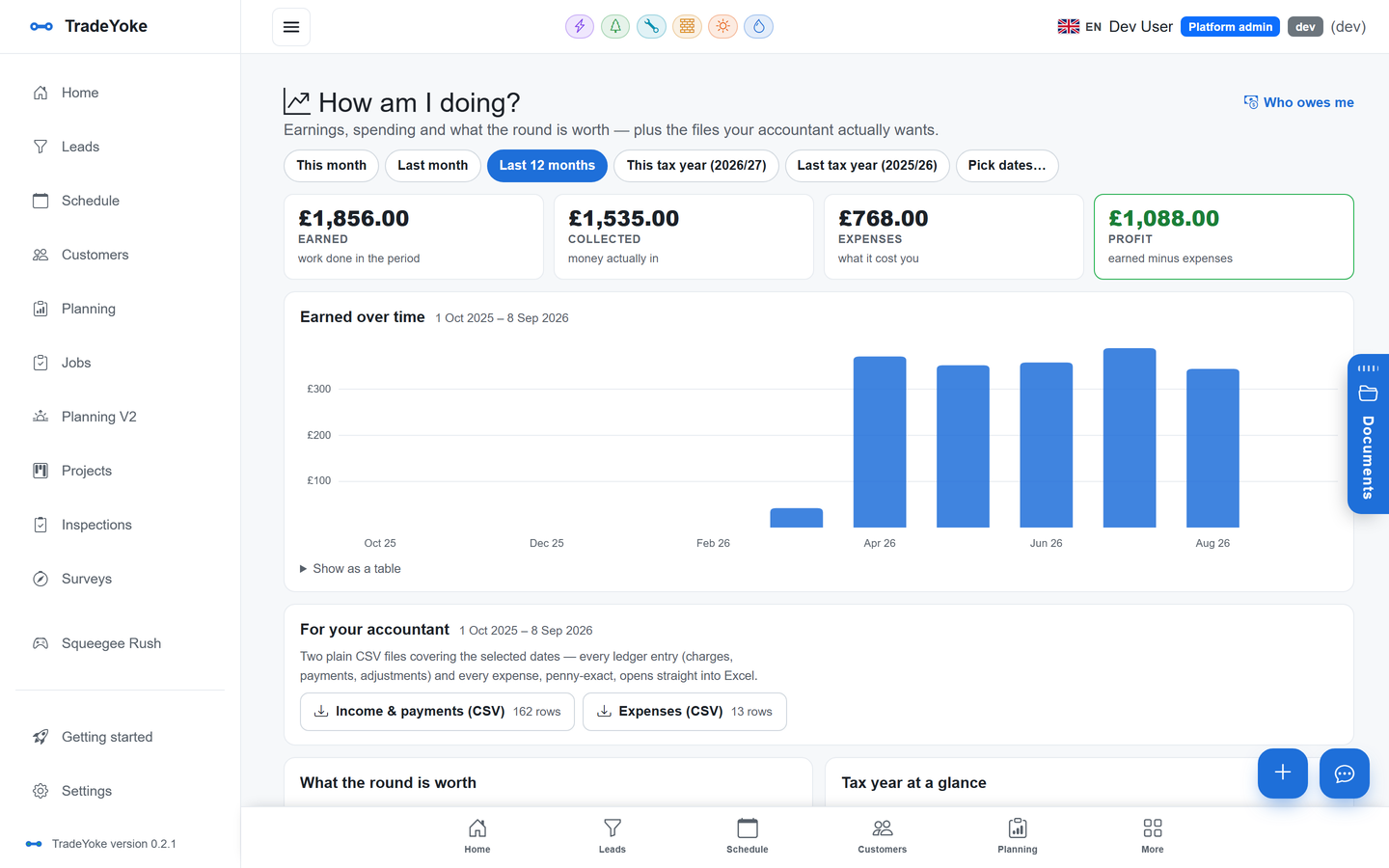
The second test is the accountant's bill. Clean records, two ready-made CSVs and a bookkeeping sync that has already posted every invoice can take real hours off year-end, and those hours are charged at your accountant's rate, not yours.
What a free trial should look like
A trial should show you far more than the diary, and it should not ask for a card. A trial that only shows you the diary tells you nothing about whether the paperwork and the chasing are worth the money. Ours gives you 30 days of Essentials with no card required; emailing and texting customers and online payments unlock when you choose a plan, and the pricing page says plainly which plan adds what; there is more on how to spend that week in our checklist for choosing job management software.
Whatever you choose, make the decision on your trade's real week. A window cleaner's costs are dominated by collections; an electrician's by certificates and rebooking. Have a look at what each trade gets on the trades page before you compare prices.
Price the software against the hours it gives back and the invoices it stops you forgetting, not against the cheapest diary on the market.
TradeYoke
Questions people ask
Is free job management software any good?
Free tiers usually cap customers, users or invoices, and the useful features sit behind an upgrade. They are fine for a look around, but for a trade with regular customers a paid plan in the £15 to £30 band is the realistic floor.
Why is one plan twice the price of another?
Usually because the dearer plan carries features that cost the vendor money to run: card and Direct Debit processing, bookkeeping sync, HMRC filing and tracking. If you will not use them, stay on the cheaper plan and move up when you need one.
Do I pay VAT on the subscription?
Software subscriptions from UK suppliers carry VAT. If you are VAT registered you can normally reclaim it; if not, the advertised price is what you pay. Check with your accountant if you are unsure.
Can I pay yearly to save money?
Many vendors discount an annual payment. Take it only after a full month on the software; the discount is not worth being locked to a tool your team will not use.
See the whole price list
Four plans, per business, no per-user fees. Start with 30 days of Essentials, no card, and pick a plan when you know what you use.