'We're coming tomorrow': the text that stops locked gates
One text at 6 pm the day before, sent from tomorrow's plan, and the side gate is open, the car is off the drive and the money is ready. How reminder texts work and what to put in them.
A "we're coming tomorrow" text, sent at about 6 pm the evening before from tomorrow's actual plan, is the single cheapest improvement most rounds can make. It gets gates unlocked, cars moved and cash left out, and it turns "I didn't know you were coming" into a reply you can act on before you set off.
This post covers when to send it, what to say, what to do with the replies, and how to send the right message to the right customers without typing it forty times.
Why the 'we're coming tomorrow' text works
A locked side gate costs you the back of the house, a return visit or an awkward half-clean at full price that the customer resents. A car on the drive under the front windows costs you ten minutes and a note through the door. Both are solved by a single line of text the night before. Customers like it too: it feels organised, and it is the kind of small courtesy that keeps a house on your round when a cheaper leaflet comes through the door.
It also protects you. If the gate is still locked in the morning, you have a record that they were told, which makes the conversation about a missed visit a lot shorter.
Send it from the plan, not from a list
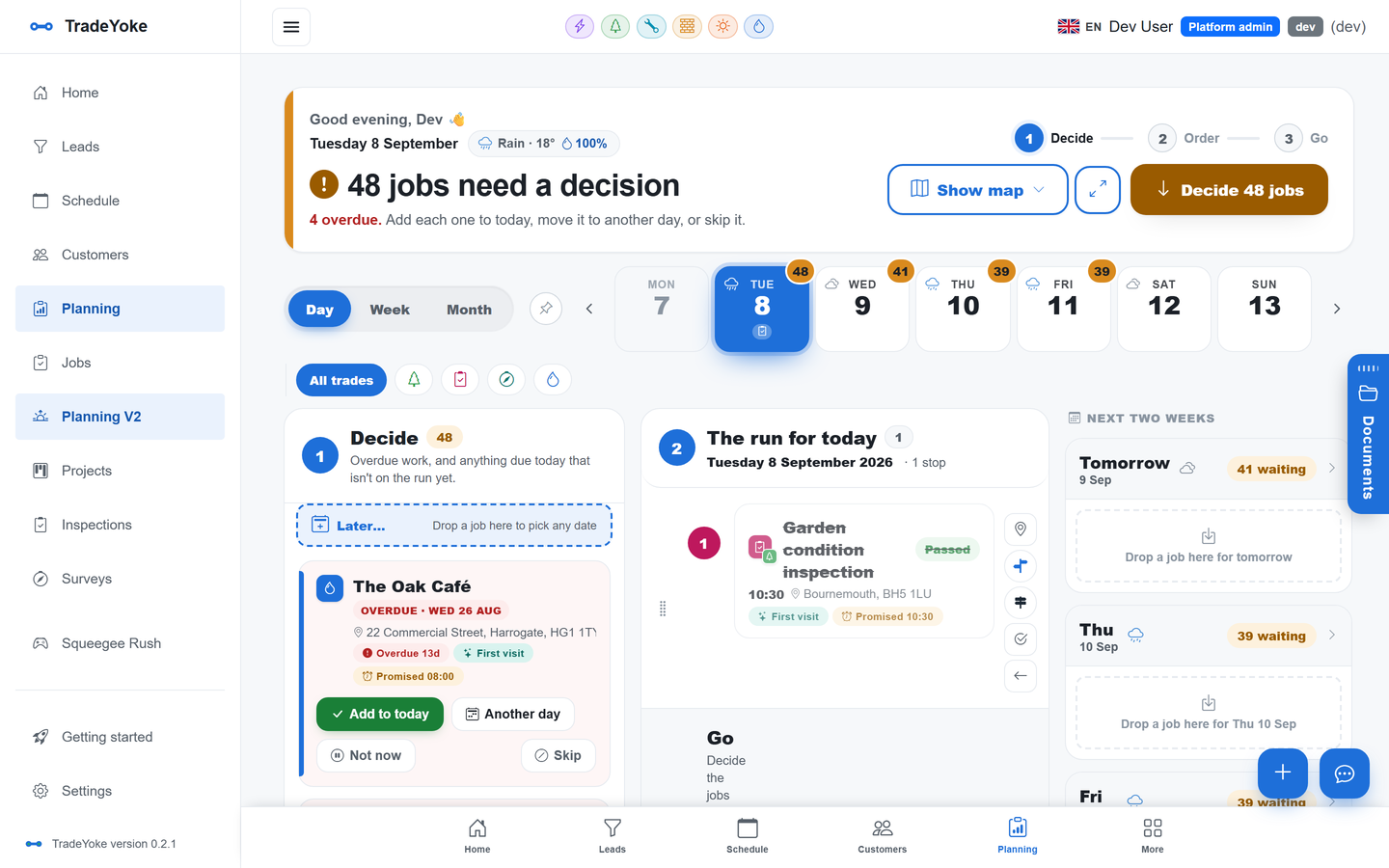
The mistake is to send the reminder from the round as it should be rather than the day as it will be. If rain pushed Tuesday to Wednesday, or you decided to leave three stops for Thursday, the customers on those stops should not get a text tonight. The fix is to plan the day first and send the text from that plan.
In TradeYoke the morning flow is Decide, Order, Go: choose which suggested jobs happen tomorrow, order them nearest-first, and send the plan to the phone. The reminder goes out to the customers on that plan only, so a rain day never produces a wrong text. That flow is described in how a round survives a wet week.
What to say
Short, specific and signed. Name the day, roughly when, what you need from them, and how they can pay. One line each. Add the customer's name if the template supports it, and keep the tone the same as you would use at the door.
Do not put a precise time you cannot keep; "morning" or "between 9 and 12" is enough and gives you room. Do not add a sales line to a reminder; a reminder that arrives with an upsell attached stops being read.
What to do with the replies
The reason to send from a real number rather than a no-reply service is that people answer. "We're away till Thursday", "the dog's out, can you do the back next time", "can you skip this month". Each reply is a decision that saves a wasted stop, so it needs to land somewhere you will see it in the morning rather than in a personal phone full of other messages.
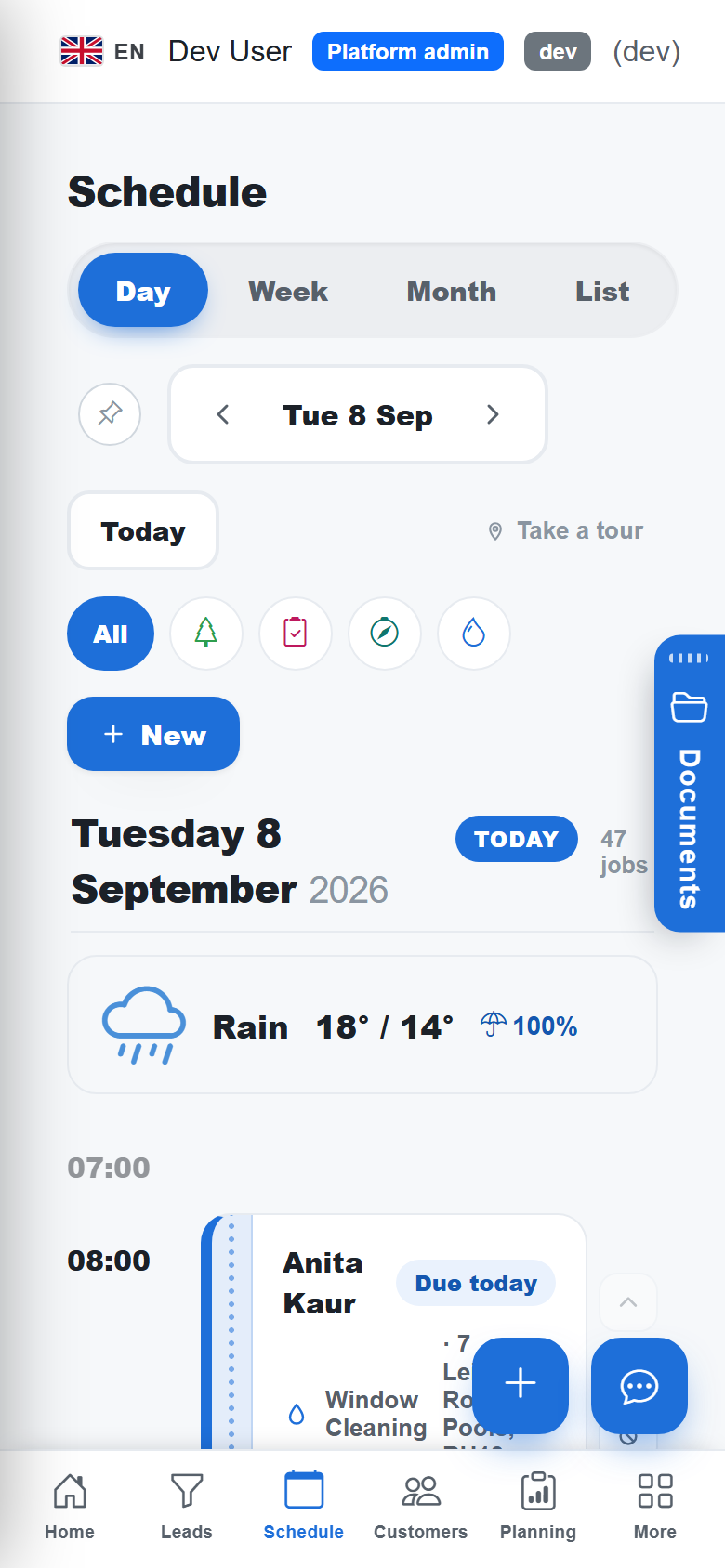
In the app replies land in the customer's own thread alongside the visit history, so when you open tomorrow's plan the reply is there against the job. A "we're away" reply becomes a skip and a carry-over in two taps, and the customer gets a receipt when the next clean is done. The same thread carries emails, so the story of that customer is in one place whichever way they wrote.
Scheduled, not remembered
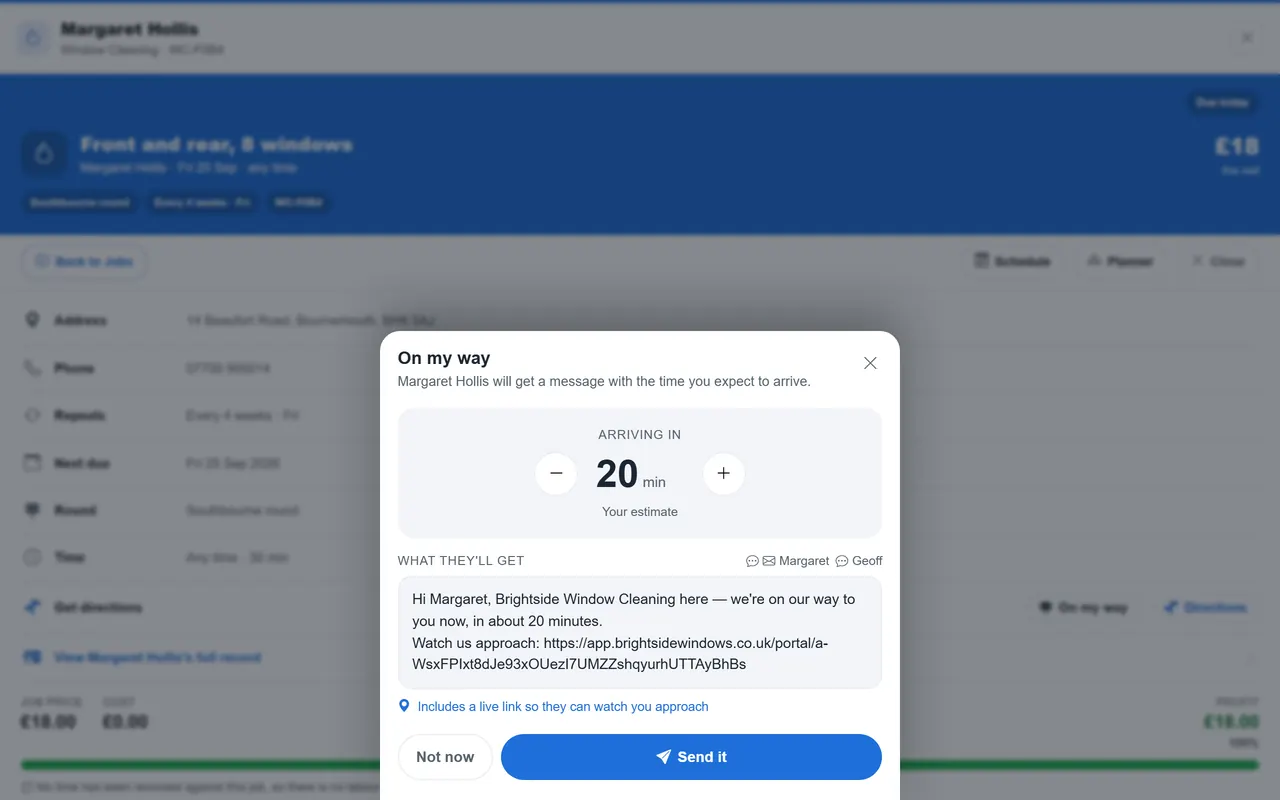
The text has to go at the same time every evening or it does not work, and 6 pm on a Tuesday is when you are least likely to remember it. Schedule it. In the message wizard you choose email or SMS, write once, and pick "send now" or a time; the app sends it whether or not you are looking at your phone. If a plan changes after the message is scheduled, cancel and resend from the new plan in the same wizard.
The same wizard sends the on-the-way text in the morning when the job before overruns, the receipt when a clean is paid, and the owing notice when it is not. One tool, four moments in the customer's day. It is part of Essentials and every plan above it on the pricing page and works for gardeners and every other trade on the trades page, not just window cleaners.
Keeping it on the right side of the rules
A service message to an existing customer about a visit they are expecting is different from a marketing text, but the line blurs the moment you add an offer. Keep reminders as reminders, put marketing in a separate message people have agreed to receive, and honour a "please stop texting me" straight away. The ICO's guidance sets out the rules; if in doubt, keep the text about the visit and nothing else.
Plan the day, then text the plan. Never text the round as you wish it were.
TradeYoke
Questions people ask
What time should the reminder text go out?
Early evening the day before, around 6 pm, works for most rounds: late enough that the day's plan is final, early enough that people can move a car or unlock a gate before bed.
Should I send by text or email?
Text for the day-before reminder because it is read within minutes. Email for invoices, receipts and anything with an attachment. The wizard sends either, and both land in the same customer thread.
What if the customer replies and I miss it?
Replies land in the customer's thread in the app, against the job, so they are in front of you when you open tomorrow's plan. Nothing sits in a personal inbox. See on-the-way texts and live monitoring for the morning side of the same conversation.
Does it cost money to send texts?
SMS is charged per message by the network, pence at a time. Set it against one unlocked gate and it pays for the month. The mechanics of the pay link in the text are in Direct Debit for window cleaners.
Send tomorrow's text from tomorrow's plan
Plan the day, order it, and the reminders go out at 6 pm to the right customers. Thirty days free, no card.