Fortnightly in summer, monthly in winter: seasonal schedules per property
A garden does not grow at the same speed all year, so the visit pattern should not stay the same either. How to set a seasonal schedule per property and let the diary follow the seasons.

A seasonal garden maintenance schedule visits fortnightly through the growing season, roughly April to October, and monthly through winter, and it is set per property rather than for the whole round. A shady lawn on clay and a south-facing plot with a lot of bedding do not need the same pattern, and a diary that treats them the same either over-visits one or neglects the other.
This post sets out a sensible default pattern, how to adjust it per garden, how the price follows the pattern, and how the diary changes gear at the change of season without anyone re-booking two hundred visits.
A seasonal garden maintenance schedule, month by month
A default pattern for a typical domestic garden
| Period | Cadence | What each visit is mostly about |
|---|---|---|
| March | Monthly, moving to fortnightly | First cut, edges, beds cleared, mulch, spring pruning |
| April to June | Fortnightly (weekly for some lawns) | Mowing, edging, weeding, deadheading, feeding |
| July to August | Fortnightly | Mowing slows in drought, watering, hedges, deadheading |
| September to October | Fortnightly, moving to monthly | Last cuts, leaf clearing starts, hedge trim, bulbs |
| November to February | Monthly | Leaf clearing, winter pruning, beds tidy, paths and gutters |
Treat that as a starting point, not a rule. The RHS publishes month-by-month guidance on what a garden needs, and the visits should follow the jobs, not the calendar. The point is that the pattern changes, and that your diary should change with it.
Set the pattern per property, not per round
The temptation is to run the whole round on one cadence because it is easier to plan. It is also where the money leaks. A small courtyard with gravel and pots needs a monthly visit all year and a fortnightly one is a waste of a slot. A big lawn with fast growth needs weekly in May and you will be blamed for the hay if you turn up fortnightly. Set each garden's pattern on its own record and let the diary do the planning.
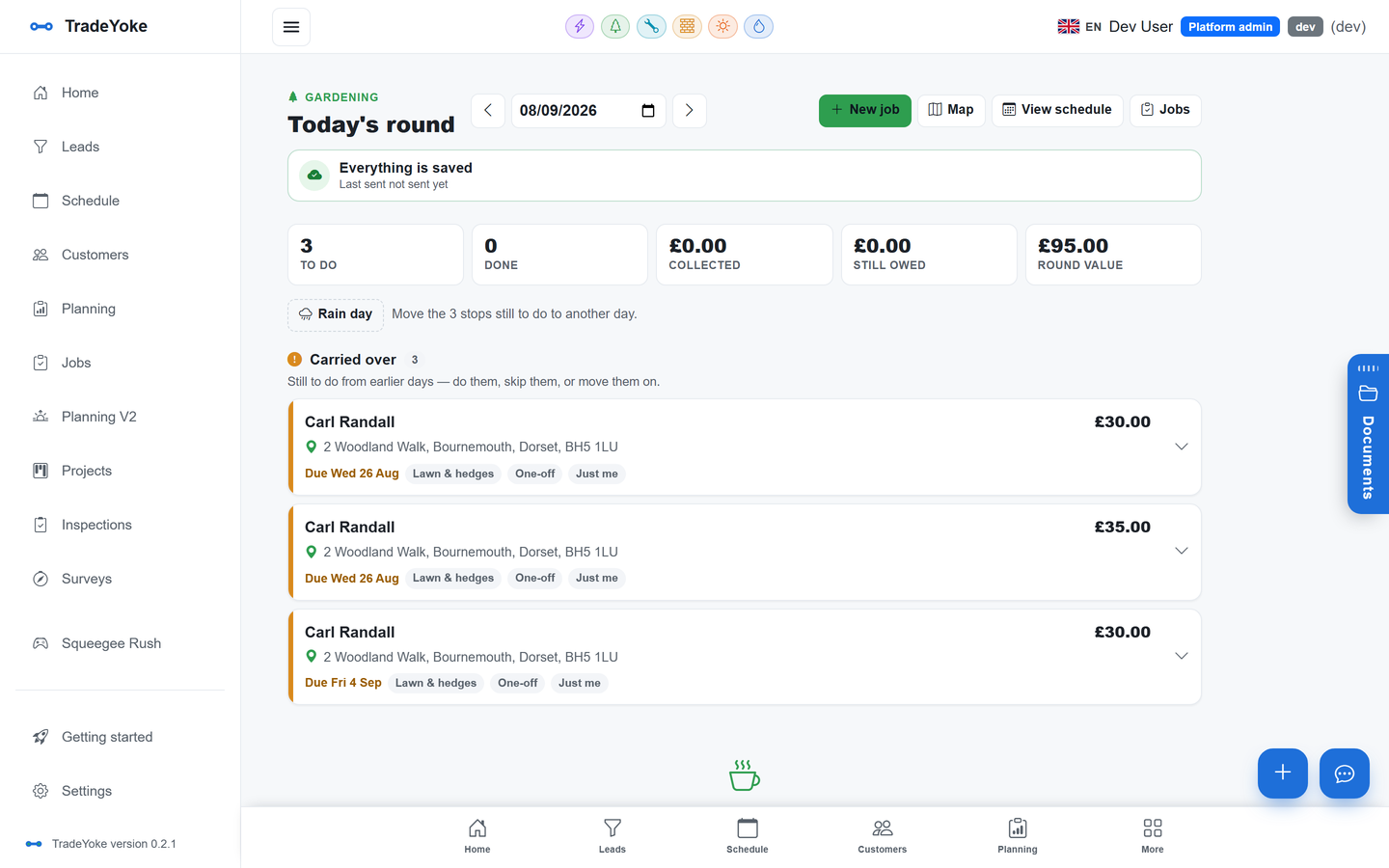
In the app each property carries its own frequency by season, its price and its task list, and the recurring visits are generated from that. Change the pattern once on the record and every future visit for that garden moves; nothing else on the round is touched. The gardening trade page shows how a round looks with mixed cadences.
The price follows the pattern
If you charge per visit, a seasonal pattern changes the customer's bill through the year on its own: more visits in June, fewer in January. If you charge monthly, the fee should be the annual number of visits multiplied by the visit price, divided by twelve, and the contract should say what that pattern is so the quiet months are not a surprise. Either way, the pattern and the price are one decision, and they should be made together when you set up the property. Every plan on the pricing page includes the round and per-visit invoicing; Premium adds Direct Debit for a monthly fee. The contract structure that carries both is in garden maintenance contracts that stick.
Changing gear at the change of season
The awkward fortnight is the switch: the week in March when half the round goes fortnightly and the week in October when it goes back. Do it garden by garden as you visit, not all on one day. Each visit in March is a chance to look at the growth and decide whether this one goes to fortnightly now or next time, and the record per visit means the next due date moves from the day you decide.
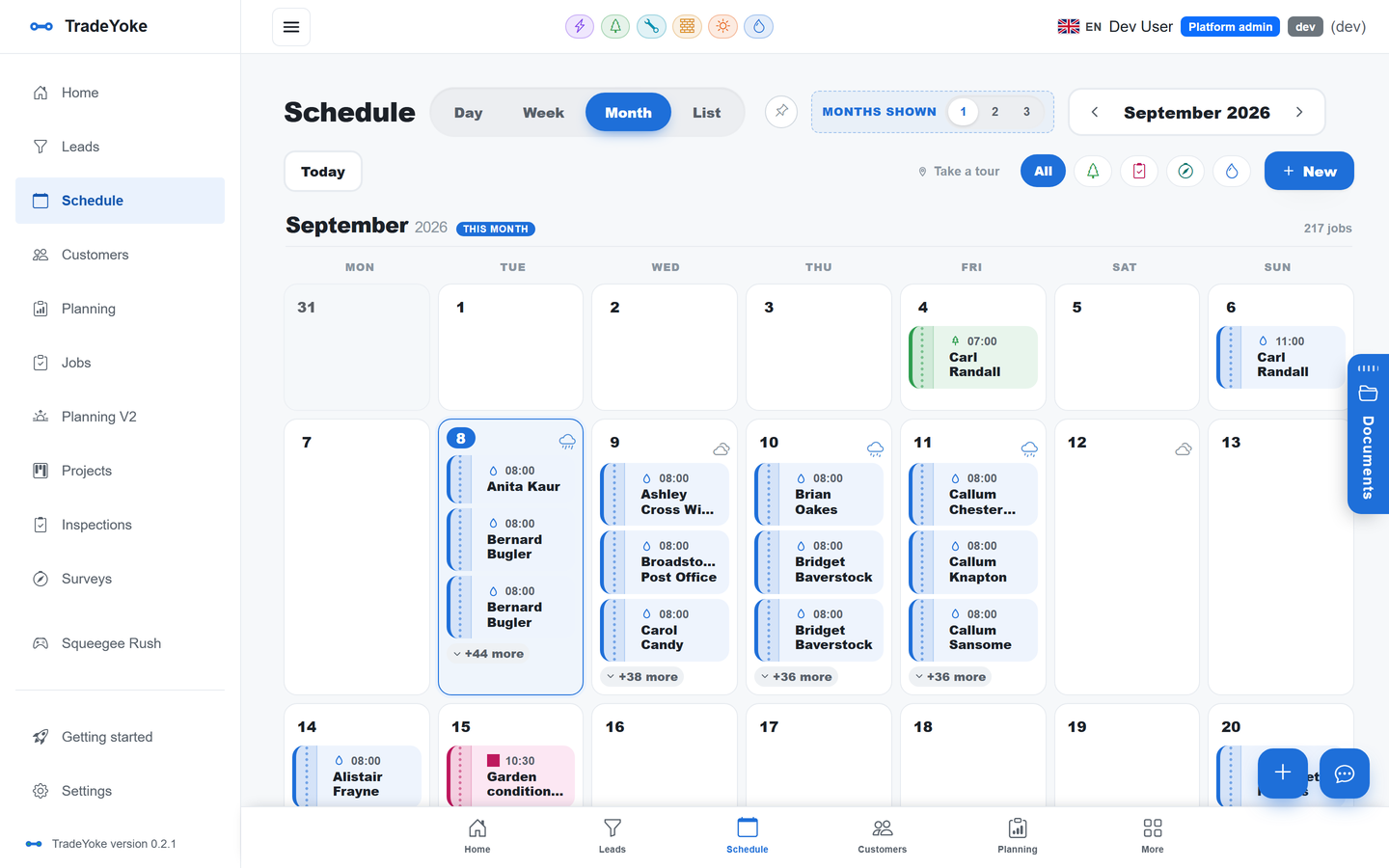
The diary shows the round by day, week and month, colour-coded, so you can see the coming weeks fill up as gardens switch and even out the load by nudging a few. The plan for each day is then ordered nearest-first from the properties actually due, which matters more in summer when the days are long and full. Weather is on the same screen; a wet week in April shifts the whole round in the same way as a window cleaner's, which is covered in how a round survives a wet week.
Winter is where the round is kept
A monthly winter visit is not a formality. It is the visit that keeps the customer's garden looking cared for when the neighbours' are not, which is when the next customer on the street notices. Leaf clearing, winter pruning, gutters, a tidy of the beds and a check of the fences and the shed. Photograph it and send the photos with the invoice, because in January the customer has not looked out of the window; that habit is the subject of before-and-after photos that sell the next visit.
Winter is also when you quote the spring extras: the hedge reduction, the new border, the turf. Those go on the quotes board and become jobs in March, when the diary has room for them before the fortnightly pattern fills it. If you also do landscaping, fencing or a second trade, the same customer list and diary carry it; see running two trades on one account and the platform overview.
Follow the growth, not the calendar. Set the pattern per garden and let the diary change gear for you.
TradeYoke
Questions people ask
Should every garden go fortnightly in summer?
No. Small, low-maintenance gardens can stay monthly all year and some fast lawns need weekly in May and June. Set the pattern per property and adjust it as you see the growth.
How do I bill a seasonal pattern monthly?
Count the visits in a year, multiply by the visit price, divide by twelve, and put the visit pattern in the contract. The customer pays the same each month and knows what to expect in January.
What happens if I miss a fortnightly visit because of weather?
Carry it over rather than skip it. The visit record moves to the new date and the next visit stays on the original cycle, so the garden gets its visits and the round does not drift.
Do I have to re-book every visit when the season changes?
No. Change the property's pattern once and every future visit for that garden moves. The rest of the round is untouched.
Let the diary follow the seasons
Set each garden's pattern once and the round changes gear on its own. Thirty days of Essentials free, no card.