Getting more local jobs as a tradesperson: what actually moves the needle
Word of mouth and a van sign only grow as fast as your existing customers talk about you. Here's what actually gets a trade business found locally, what turns a search into a booked job, and how to tell which of it is really working.

Quick answer
Quick answer: the trade businesses that keep growing do three things well: they're easy for Google to find and recommend (a complete Google Business Profile and a steady trickle of recent reviews), they're easy to book outside the hours you can answer a phone, and they know which of their marketing is actually producing paying customers rather than just enquiries. None of that needs to cost anything beyond time — a website with online booking is the one piece that genuinely needs paid software.
Why word of mouth alone has a ceiling
A round built entirely on word of mouth and a van sign grows at exactly the rate your existing customers talk about you, in the streets you already cover. That's not nothing — it's usually how every trade business starts — but it has a hard ceiling: it can't reach the person who's never heard of you, searching "gardener near me" or "electrician [town]" at nine on a Sunday night, wanting to book before Monday morning. Getting more local jobs isn't really about marketing budget; it's about being findable and bookable at the moment someone's actually looking, whether that's a friend's recommendation or a Google search.
What actually gets you found locally, whatever software you use
Quick answer: Google's own guidance is that local ranking comes down to three things — how well your listing matches what someone searched for, how close you are to them, and how well-known and trusted your business looks — and none of the three cost anything to work on directly.
Google Business Profile is the free listing that powers the map results at the top of a local search, and Google's own help pages are candid about what moves it: relevance (does your listing clearly say you do what was searched for), distance (how close you are to the person searching), and prominence (how well-known your business is, which reviews and other sites linking to you both feed into). A profile with every service listed, current opening hours, real photos and a steady flow of recent reviews consistently outranks one that was filled in once in 2022 and never touched again.
Getting found locally, without spending on ads
- Fill in your Google Business Profile properlyEvery service you actually offer, not just the two you always say first — a profile that only mentions "window cleaning" won't surface for "gutter clearing" or "conservatory roof cleaning", even if you do both.
- Ask for a review while the job's still freshThe best moment to ask is the same day, while the customer's still pleased with the work — not a bulk request sent to everyone three months later.
- List the towns and postcodes you actually coverBeing vague about where you work either misses searches from areas you'd happily travel to, or wastes your time on enquiries from half an hour away.
- Keep your name, address and phone number consistent everywhereYour website, Google listing, Facebook page and any directory you're on should all say the business name and number the same way — inconsistency quietly undermines the "prominence" signal.
- Answer or reply fast, especially out of hoursA search at 9pm on a Sunday is a real customer, not a wrong number — the business that replies first, even just to say "I'll call you in the morning", usually gets the job.
What actually turns a search into a booked job
Quick answer: the single biggest reason a promising enquiry goes cold is friction between "interested" and "booked" — a phone call they have to remember to make, an email that sits unanswered until Monday, a form that goes nowhere. Cutting that gap to one action, available any time of day, converts more of the enquiries you're already getting without spending a penny more to generate them.
Knowing which of it is actually working
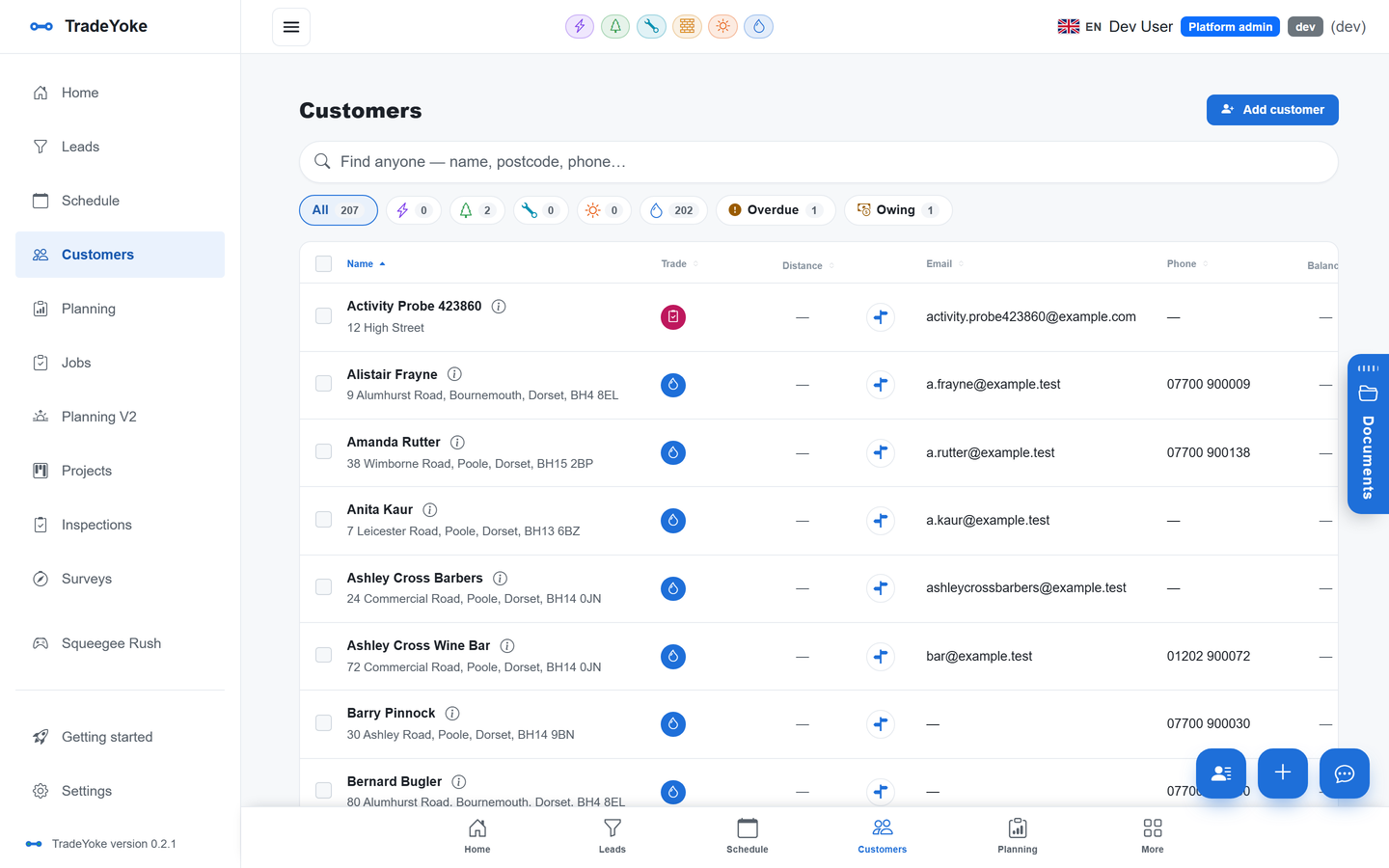
It's hard to do more of what's working, and stop doing what isn't, if you can't actually see which is which. Every customer TradeYoke's CRM holds carries a lead source — how they first heard about you — captured when they're added, whether that's a phone call, a Google search, a referral or a card through the door. Nothing here needs the paid plans: it's part of TradeYoke's free customer record, alongside the notes, documents and job history every trade shares on one account. Over a few months that turns "I think most of my new work comes from Google" into an actual answer.
Being bookable outside office hours
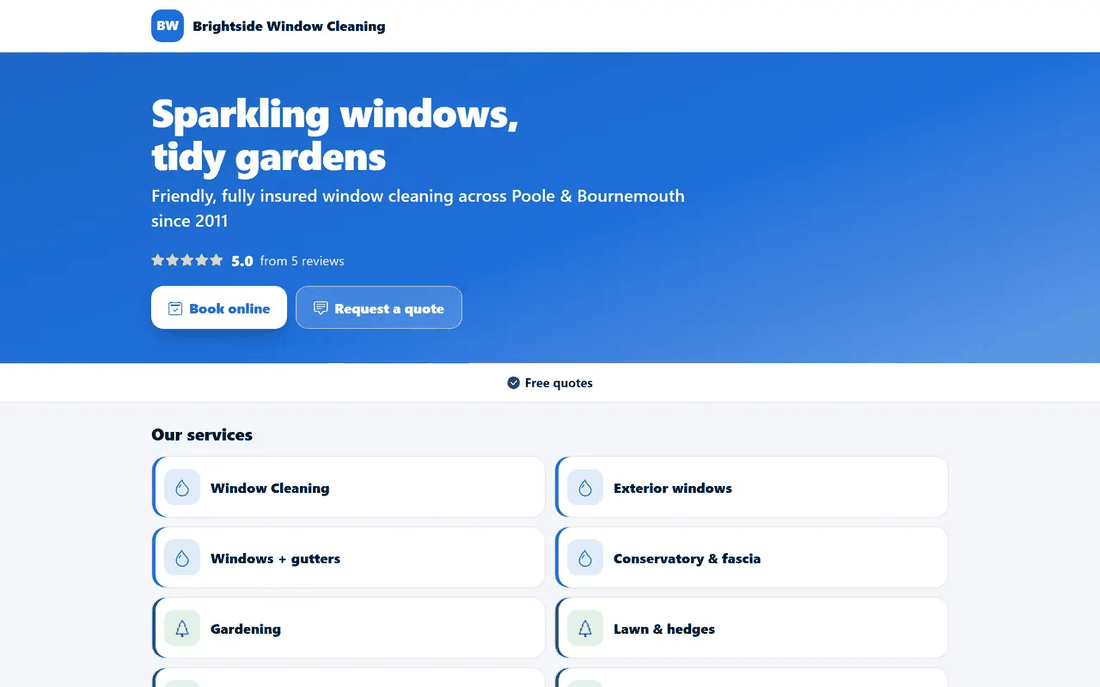
The one piece of this that genuinely needs paid software is being bookable at 9pm on a Sunday without anyone at a desk. TradeYoke's business website — part of the Ultimate plan — is built into the same account as your jobs, customers and invoices, with your services, photos, before-and-afters and reviews, edited in a live phone and desktop preview with no developer needed. A customer who books online or fills in a request-a-quote form doesn't send an email that might sit in an inbox until Monday: it lands straight on the Leads board, with the service, day and slot they chose, ready to turn into a quote or a job in the same click as a phone booking.
Getting the reviews without having to remember to ask
Reviews feed both the "prominence" Google looks at and the trust a new customer needs before they'll book a stranger — but remembering to ask, for every job, is exactly the kind of admin that falls off the end of a long day. TradeYoke can send a review request automatically a couple of days after the work, by email or text, or the office can send one by hand for a particular customer. Whoever writes it does so on a tokenised page, and nothing goes public until you've approved it — so a bad day never lands on your public listing by accident. One setting decides where every ask points: TradeYoke's own page, or your Google Business Profile link, so the same review that reassures a visitor to your site can also build the exact signal Google is looking for. Every customer also gets their own referral code and share link on their account page, so a customer who's already vouching for you by word of mouth can do it with one tap instead of a phone number scribbled on a fridge.
Do I need a website to get more local jobs?
Not to get started — a complete Google Business Profile and asking for reviews cost nothing and matter most. A website with online booking (TradeYoke's Ultimate plan) matters most for the enquiries that arrive outside office hours, which a phone-only business simply misses.
How do I know if my marketing is actually working?
Track where each new customer came from. TradeYoke's customer record carries a lead source for exactly this — it's part of the free plan, so you can start seeing the pattern before you pay for anything.
Does TradeYoke manage my Google Business Profile for me?
No — Google Business Profile is a free listing you manage directly with Google. TradeYoke's own review requests can point at your Google listing link so the reviews you collect help both places at once.
What happens to a booking made on my TradeYoke website?
It lands as a lead on the Leads board with the service, day and slot the customer chose, ready to quote or book straight onto the job — nothing to copy in by hand.
See where your next customer comes from
30 days of Essentials free, no card required. Add your customers, tag how they heard about you, and see the pattern for yourself.