How to price a window cleaning round in 2026
Price by time and access, not by the number of windows. The 2026 bands for UK homes, the rule for hard-access work, and how to raise prices without losing the street.

Price a window cleaning round by how long each house takes and how hard it is to get at, not by counting windows. In 2026 a UK terrace typically sits between £8 and £15 a clean, a three-bed semi between £12 and £20, a four-bed detached between £18 and £35, and anything with hard access from £30 to £60 or more.
Those bands are wide on purpose. The same semi is worth £12 on a street where you clean nine in a row and £20 when it is the only one on the road. This post sets out the bands, the rule behind them and a way to raise prices that keeps the street.
How to price a window cleaning round: the 2026 bands
Typical UK residential prices per clean
| Property | Typical price | What moves it |
|---|---|---|
| Terrace or small semi | £8 to £15 | Front only, whether you can walk straight in, how many on the street |
| Three-bed semi | £12 to £20 | Rear access, conservatory, number of frames |
| Four-bed detached | £18 to £35 | Time on site, gates, porches, garage windows |
| Hard access or large | £30 to £60+ | Height, water-fed pole reach, ladders, distance from the van |
These are per-clean prices for a regular four or eight-weekly round. First cleans, one-offs and end-of-tenancy work are priced separately and higher because there is no repeat to spread the travel over. The bands come from the industry's own guides; see the bookmark below for the fuller breakdown.
Time and access, not window count
Counting windows feels precise and it is almost always wrong. A twelve-window terrace with a front door on the pavement takes eight minutes; a twelve-window semi with a locked side gate, a conservatory and a pole extension for the back dormer takes twenty-five. Price the second at the first's rate and you have just paid yourself a third as much for the same job.
Time your next few cleans. Note when you leave the van and when you are back in it, including the walk. Divide your target hourly rate by the minutes and you have the price the house is actually worth. Anything that adds minutes adds money: gates, dogs, awkward parking, moving furniture on a conservatory roof.
Density is the hidden multiplier
The most profitable round in town is not the one with the highest prices; it is the one with the least driving. Nine houses in a row at £12 beat three scattered houses at £20 every day of the week, because you are paid for cleaning and not for the A31. Price lower to win a street, and hold the price on the outliers that cost you fifteen minutes each way.
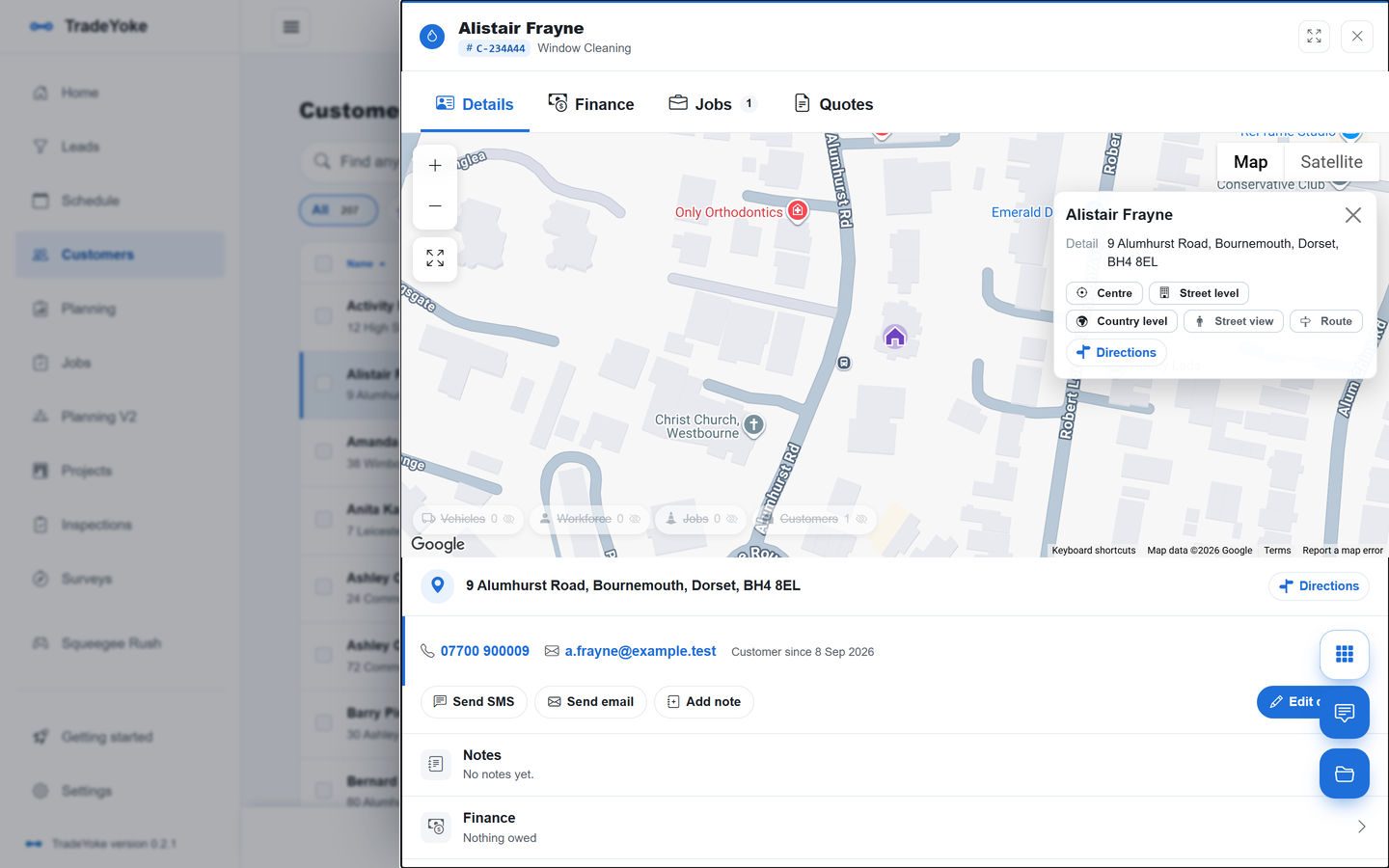
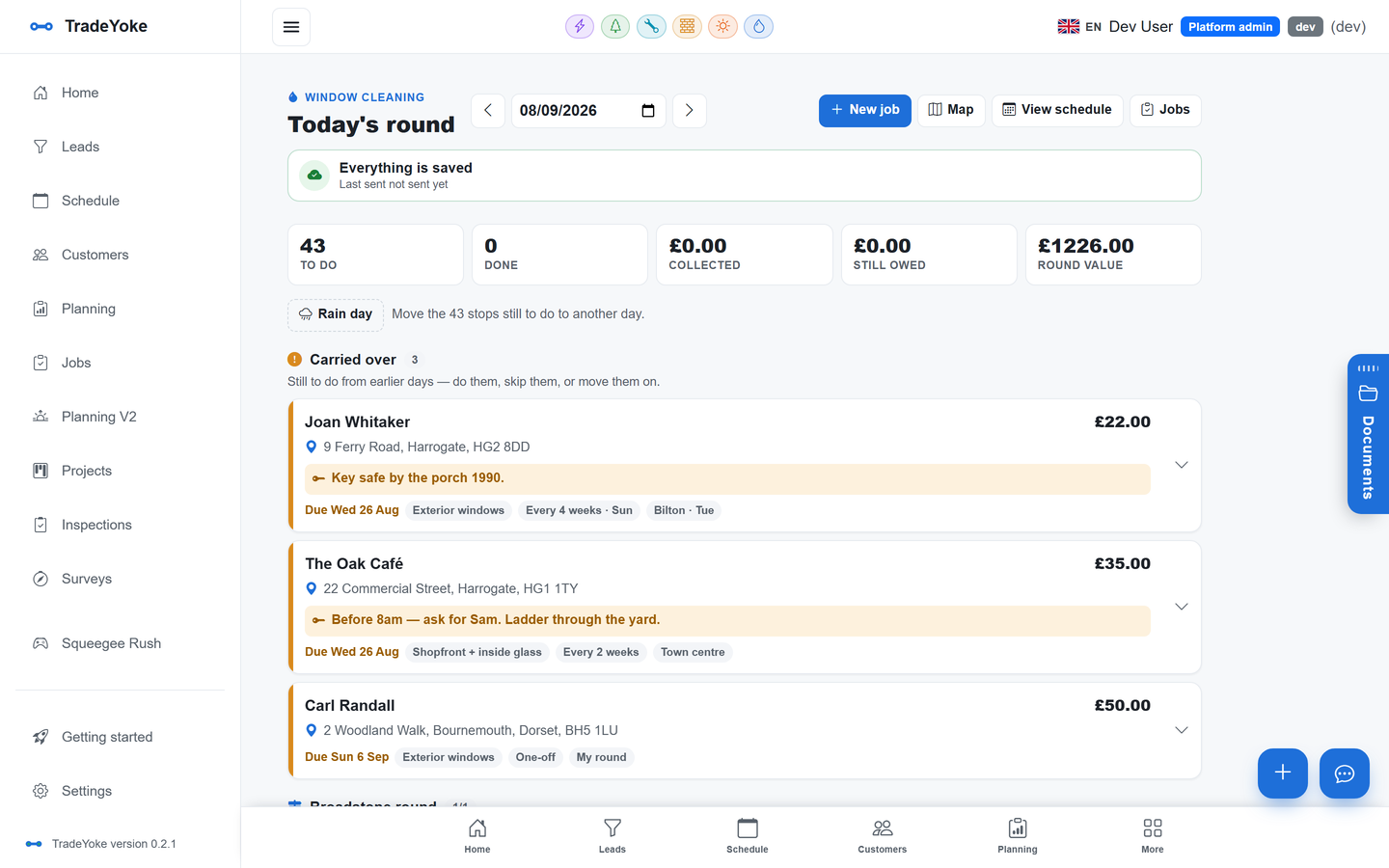
This is why we show the round's value and route in the app rather than just a list. The window cleaning trade page shows how a round is planned nearest-first, and the report tells you what each day is worth so you can see which day needs filling in.
Raising prices without losing the street
Every round drifts under-priced because you set the number years ago and added customers at the old rate. Raise little and often rather than a lot once. A £1 rise on a £12 clean is 8% and nobody cancels over it; a £4 rise after five years of silence loses the customers who were only ever staying for the price.
Tell people in writing, a month ahead, with the new price and the reason in two sentences. Send it with the reminder text so they read it, not as a separate letter that gets binned. Then raise every price the same day so the round stays consistent; the app's message wizard sends the same note to the whole round at once. If you collect by Direct Debit the new amount simply applies from the next collection, which is one more reason to read why GoCardless changes the round.
You are paid for cleaning, not for driving. Price for the minutes on site and win the street with density.
TradeYoke
What the round is worth
Once your prices and frequencies are in the app, look at the round's value per week and per month. That number is your business. If it is short of what you need, the gap is filled with either more houses on existing streets or higher prices on the outliers, and the report shows which. It also makes the case for the software: a £19 plan is less than two cleans a month, and the pricing page shows what the higher tier adds if you want to collect online.
Questions people ask
Should I charge more for the first clean?
Yes. A first clean takes longer, uses more water and has no repeat to spread the travel over. Many rounds charge one and a half to two times the regular price for the first visit and say so on the quote.
Do I price by the window or by the house?
By the house, based on time and access. Counting windows looks precise but ignores gates, height and walking distance, which is where the minutes actually go.
How often should I raise prices?
Little and often. A small rise every year or two, announced a month ahead by text with the reminder, is easier on customers than a big rise every five years. Raise every house on the same day so the round stays consistent.
What about commercial work?
Price commercial on time and frequency too, but expect to invoice monthly rather than collect per visit. Reminder texts matter less; a tidy monthly invoice with a pay link matters more, which is where the day-before text gives way to the invoice email.
Put the round in and see what it is worth
Import your customers, set the prices and frequencies, and the app shows the value of every day. Thirty days free, no card.