Scaffold inspections every 7 days: the record that keeps you compliant
The Work at Height Regulations 2005 require a scaffold to be inspected after it goes up, at intervals not exceeding seven days, and after anything that could affect it. The record is the proof.

Under the Work at Height Regulations 2005, a scaffold must be inspected by a competent person after it is installed and before it is first used, at intervals not exceeding seven days while it stands, and after any event likely to have affected its strength or stability. The written inspection record is what proves any of that happened.
The rules are not complicated. The hard part is running them across twenty live sites, in weather, with a team that changes week to week, and being able to show the record when someone asks for it.
What the Work at Height Regulations say about scaffold inspections every 7 days
Regulation 12 of the Work at Height Regulations 2005 covers inspection of work equipment. For a working platform used for construction work from which a person could fall two metres or more, it requires an inspection after assembly in its position and before first use, and then at intervals not exceeding seven days. It also requires an inspection after any event likely to have affected the strength or stability of the equipment.
The inspection must be carried out by a competent person. A written report must be prepared before the end of the working period in which the inspection was completed, given to the person on whose behalf it was carried out within 24 hours, kept on site until the work is finished, and kept at an office for three months after that. Confirm the detail on legislation.gov.uk and the HSE's scaffolding pages.
After wind, after alteration, after a strike
The seven-day interval is the floor, not the whole duty. High winds, heavy rain, snow loading, a vehicle strike, an alteration by anyone including the client's own trades, or a period out of use all count as events likely to affect the scaffold, and each one triggers an inspection before the platform is used again.
In practice that means the weekly round is only part of the calendar. A named storm on a Wednesday means an inspection on Thursday, whatever day the last one was. A written record of that inspection, with the reason for it, is what shows the site was managed rather than lucky.
Handover: the day the scaffold becomes someone else's
Handover is where the inspection clock starts. The scaffold is erected to its design, or to the relevant TG20 compliance sheet where no bespoke design is needed, inspected, tagged and handed to the client with a handover certificate. From that point the user of the scaffold is responsible for making sure the seven-day inspections happen, and the HSE's guidance puts that duty on the user or hirer, not automatically on the scaffolder.
Most scaffold companies contract to do the weekly inspections anyway, because their competent people are the ones who know the structure. That is a service line as well as a duty, and it needs the same discipline as the erection: a named inspector, a date, a record.
What the inspection record needs to show
Schedule 7 of the regulations lists what a report must contain. Ticking a box on a tag is not enough on its own.
Schedule 7: the written inspection report
- Who it was carried out forThe name and address of the person on whose behalf the inspection was done.
- Where the scaffold isThe location of the work equipment inspected.
- What was inspectedA description of the equipment.
- WhenThe date and time of the inspection.
- What was foundDetails of any matter that could give rise to a risk to the health or safety of any person.
- What was done about itDetails of any action taken as a result.
- What still needs doingAny further action considered necessary.
- Who inspected itThe name and position of the person making the report.
Where TradeYoke is with scaffolding
Scaffolding is a pilot trade in TradeYoke, being used by real scaffold businesses now. The pilot runs projects with a customer, site, status and the trades involved; erect and dismantle visits on the diary; documents with expiry dates; team and vehicle registers; and quotes and invoices raised from the project. The scaffolding page describes what is in use today.
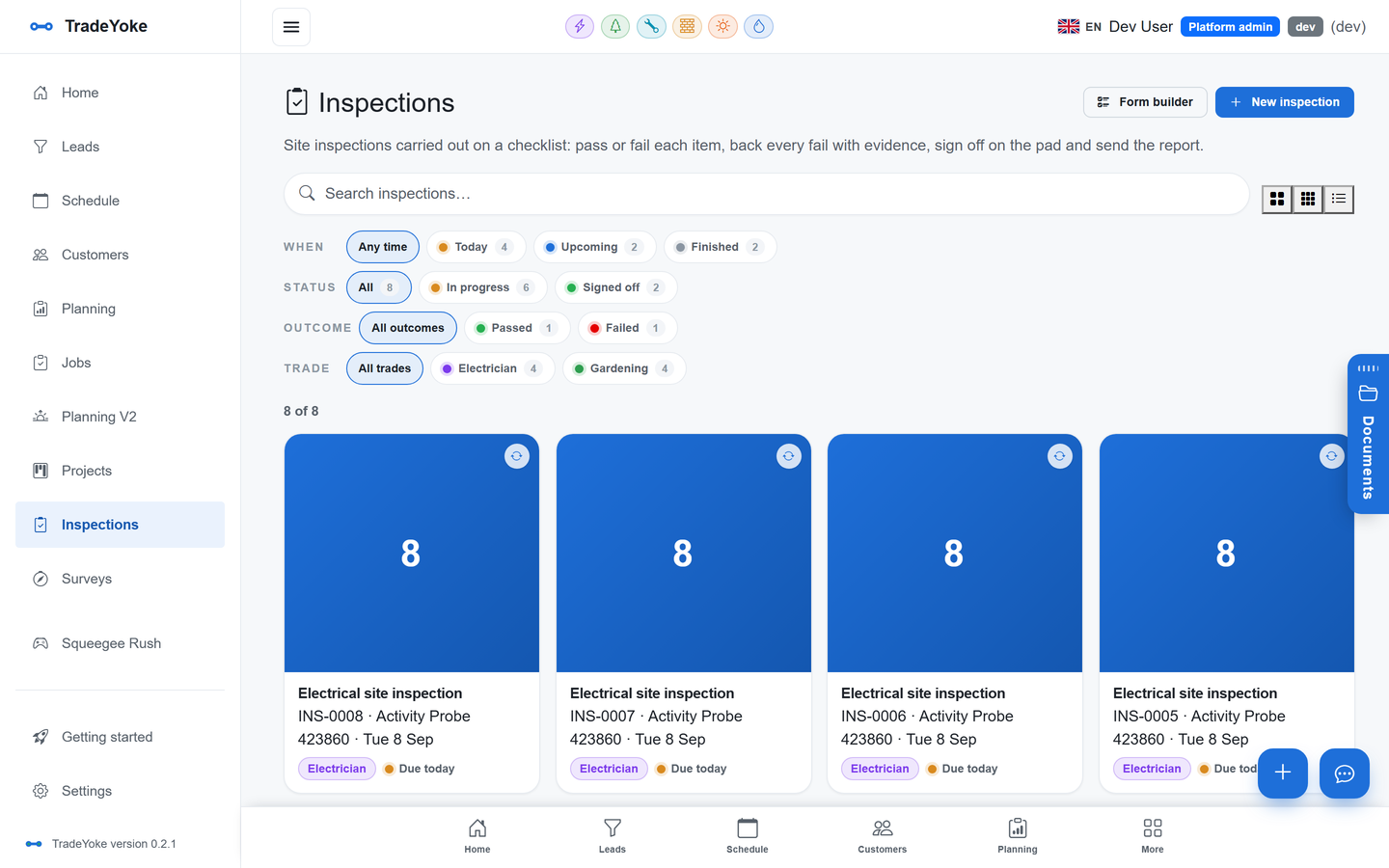
The scaffold register, the seven-day inspection records and the handover certificates are in development with the pilot businesses. They are not finished, and this post will not pretend otherwise. The design intent is the one described above: a project holds its scaffolds, each scaffold holds its inspections, an inspection that is due surfaces on the dashboard, and the report carries the Schedule 7 particulars so it stands up on its own.
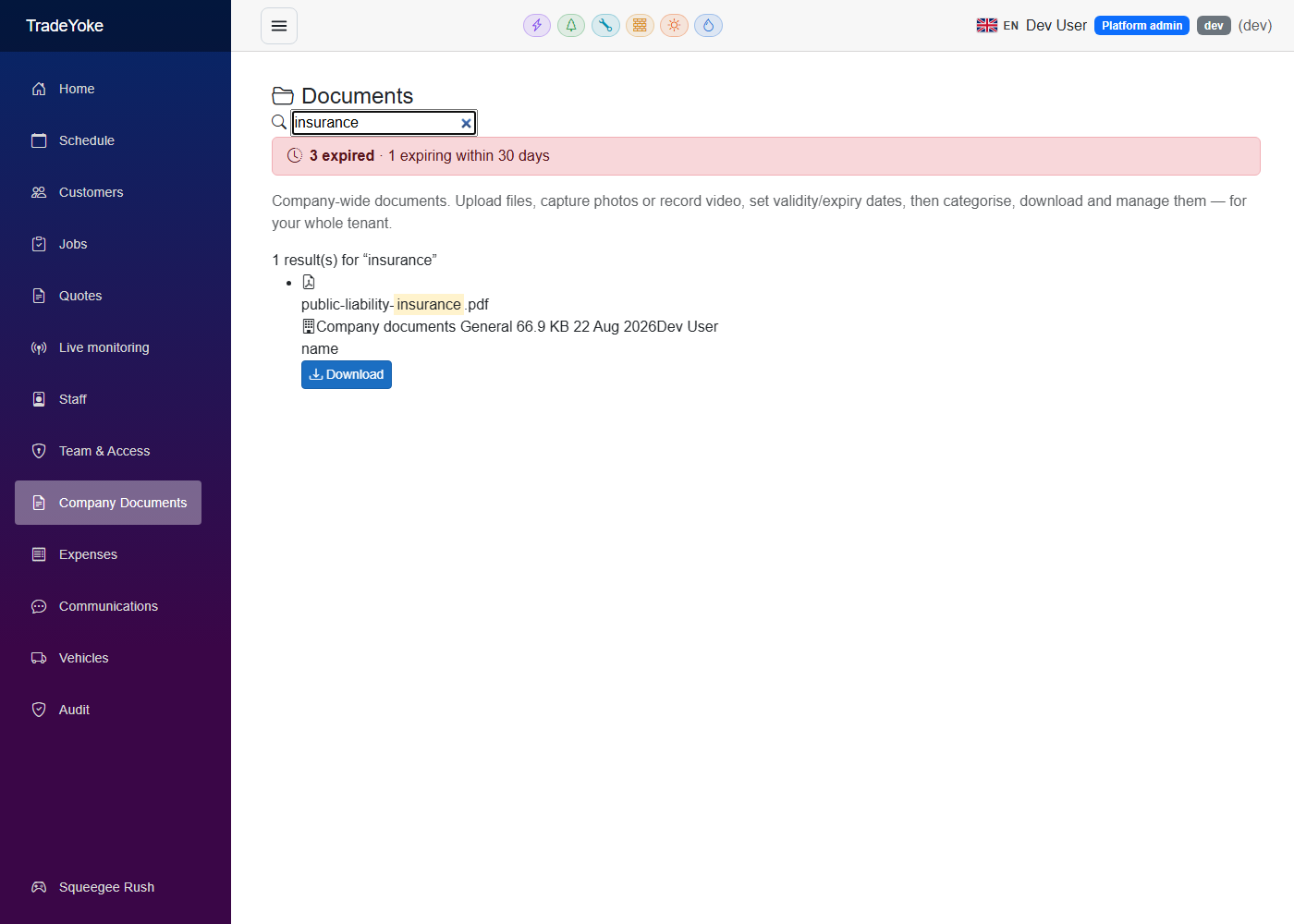
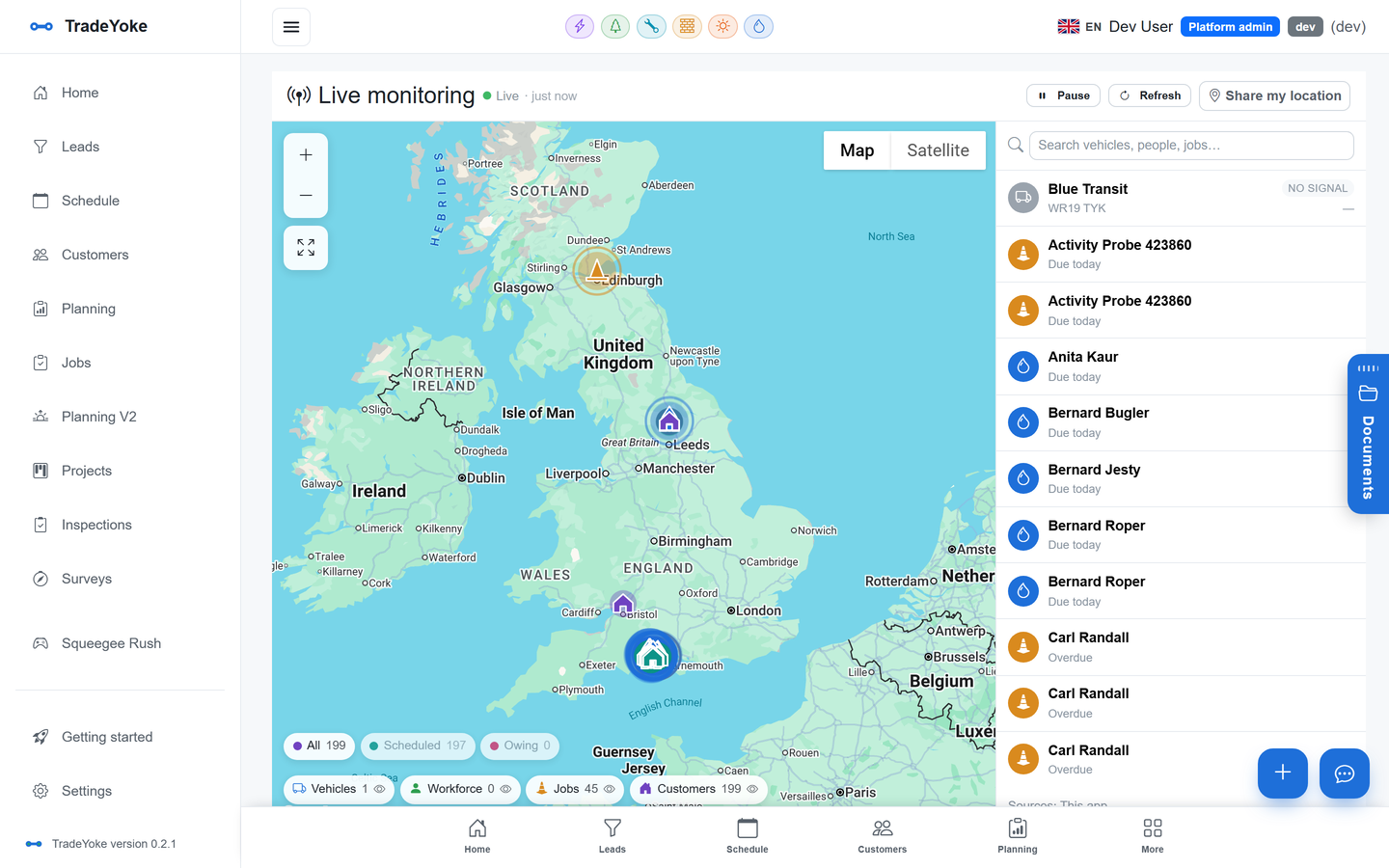
Two things already in the platform help now. The document library takes a photo from the phone and files it against the project with an expiry, which is how a wind-damage inspection gets evidenced on the day. And live monitoring shows which of the team is nearest a site when a client rings about a strike; that is covered in the post on tracking without hardware.
Scaffold work is also where projects earn their keep, because a site often carries more than one trade. Running two trades on one account explains how a project holds them together. Pilot trades are priced with the pilot businesses rather than from the pricing page.
See also: the full Paperwork & compliance guide
When a scaffold must be inspected
| Trigger | Timing | Record |
|---|---|---|
| After installation or assembly | Before first use, in position | Written report within the working period |
| While it stands | At intervals not exceeding 7 days | Written report each time |
| After an event affecting strength or stability | Before use again | Written report stating the reason |
| After alteration | Before use again | Written report |
Questions people ask
Who is responsible for the seven-day inspections: the scaffolder or the site?
The regulations place the duty on the employer or person in control of the work, which in practice is the user or hirer of the scaffold. Scaffold companies are usually contracted to carry the inspections out because they have the competent people, but the contract should say so in writing.
Do the seven days include weekends?
Yes. The regulation says intervals not exceeding seven days, which means calendar days. If the last inspection was on a Monday, the next is due by the following Monday.
What if the scaffold is not used for a fortnight?
It still needs an inspection before it is used again, and a period out of use is itself a reason to inspect. Most contractors keep the weekly rhythm going regardless because it is simpler to prove than an exception.
Does a mobile tower need the same inspections?
The regulation covers any working platform used for construction work from which a person could fall two metres or more, so towers are in scope: inspect after assembly and at intervals not exceeding seven days. HSE publishes separate tower guidance; check it for the detail on re-inspection after moving one.
Run every site on one calendar
TradeYoke's scaffolding pilot holds projects, visits, documents and the team in one place, with inspection records on the way. Start a 30-day trial of Essentials with no card.