EICR every five years: turning a legal duty into repeat work
Private landlords in England must have an EICR at least every five years. That is a rebooking you can date on the day you issue the certificate.
In England, a private landlord must have the electrical installation in a rented home inspected and tested at least every five years by a qualified and competent person, and must give the tenant a copy of the Electrical Installation Condition Report (EICR) within 28 days. That five-year cycle has a date on it, and the electrician who issued the last report is the natural person to book the next one.
The rules are short. Most of the value is in what you do with the expiry once the certificate is signed.
What 'EICR every five years' means for a landlord
The Electrical Safety Standards in the Private Rented Sector (England) Regulations 2020 apply to all private tenancies, and have done since April 2021. The installation must meet the 18th edition of the Wiring Regulations, BS 7671, and be inspected and tested at least every five years, or sooner if the previous report says so.
The landlord must give the report to the existing tenant within 28 days of the inspection, to a new tenant before they move in, and to the local authority within seven days of a request. If the report requires remedial work, it must be done within 28 days, or sooner if the report says so, and the landlord must send written confirmation to the tenant and the council within 28 days of completing it. Councils can fine up to £30,000 for a breach.
Scotland and Wales have their own regulations with the same five-year rhythm. The government guidance is the place to confirm the detail for England.
Reading the outcome: satisfactory or not
An EICR ends in one of two words. Satisfactory means the installation is safe for continued use. Unsatisfactory means at least one observation was coded as needing action. The codes are the same on every report.
EICR observation codes
| Code | Meaning | What it does to the outcome |
|---|---|---|
| C1 | Danger present. Risk of injury; immediate action required | Unsatisfactory |
| C2 | Potentially dangerous. Urgent remedial action required | Unsatisfactory |
| C3 | Improvement recommended | Does not make the report unsatisfactory |
| FI | Further investigation required without delay | Unsatisfactory |
A C3 is a recommendation; it does not stop a landlord letting the property. A C1, C2 or FI starts the 28-day remedial clock. Being clear about that in the covering email saves a week of anxious phone calls from the agent.
The certificate is the booking for five years' time
Every EICR states when the next inspection is recommended. Five years is the maximum for a rental; the inspector can set a shorter interval if the condition warrants it. Either way, the date is known on the day you sign, which is the point most electricians miss.
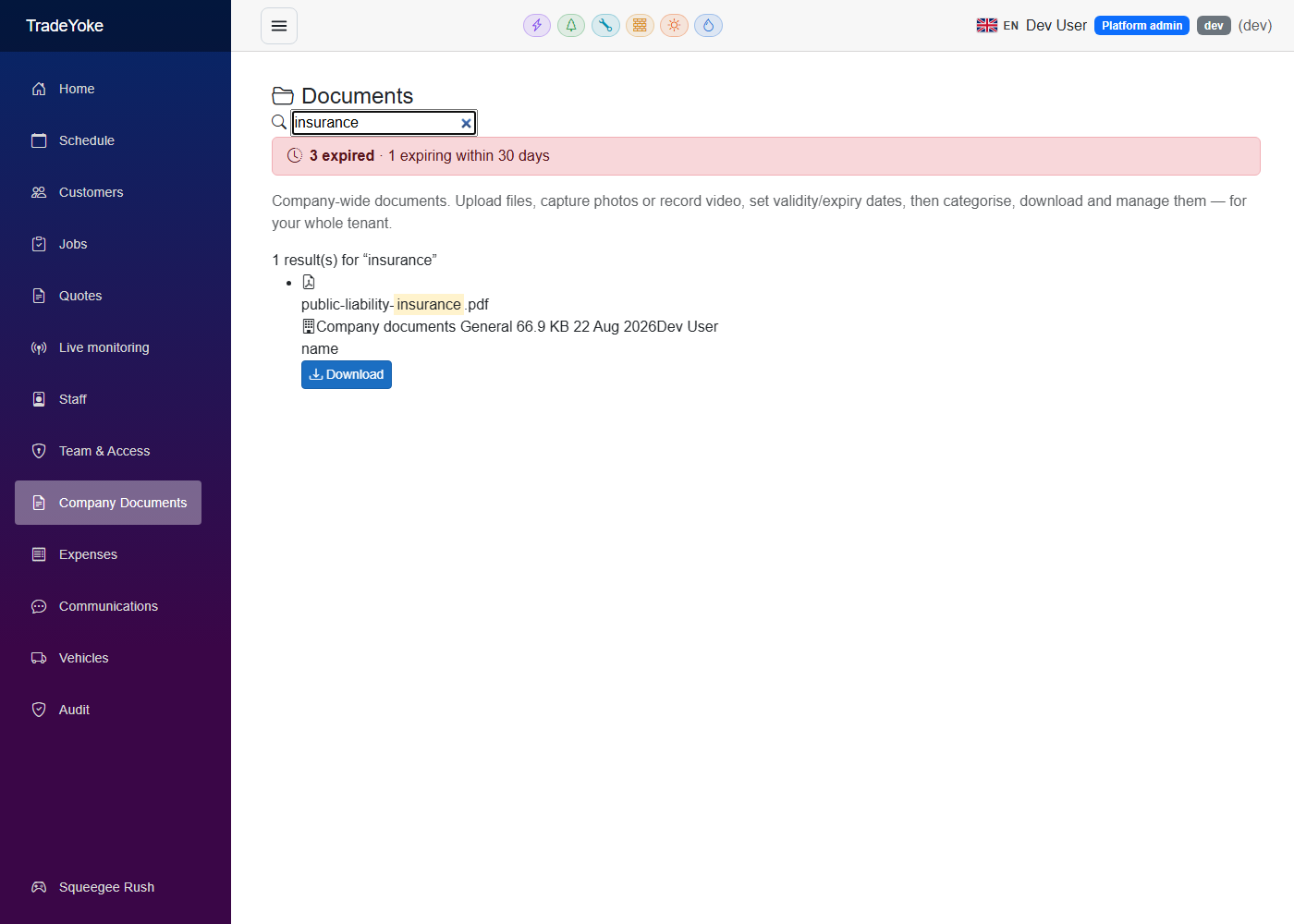
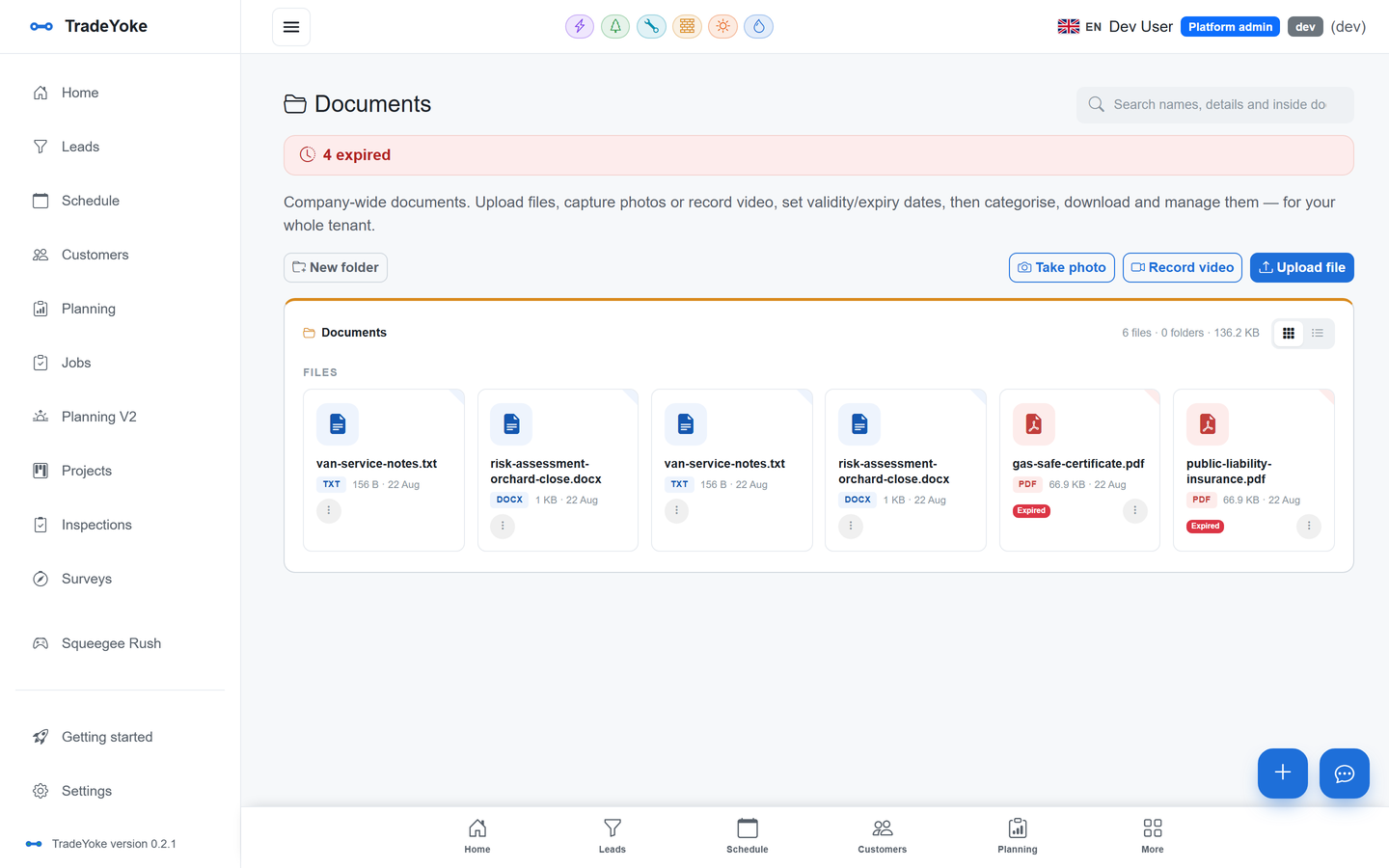
Put the expiry somewhere that will surface it. A calendar entry in five years is a start; a certificate with an expiry attached to the customer's record is better, because it surfaces next to the property's history when the agent rings about something else. The Electrician trade in TradeYoke is in pilot with real firms and does exactly this: the EICR is produced with validation and outcome, rendered as a PDF and filed with its expiry against the job and the customer. See the electrician page for what the pilot covers.
Remedials are the second job
An unsatisfactory report is not bad news for the electrician who wrote it; it is a quote. The C1 and C2 observations become the lines of that quote, the quote becomes a job, and the job becomes an invoice. The landlord gets the written confirmation the regulations ask for, and the file shows the whole chain.
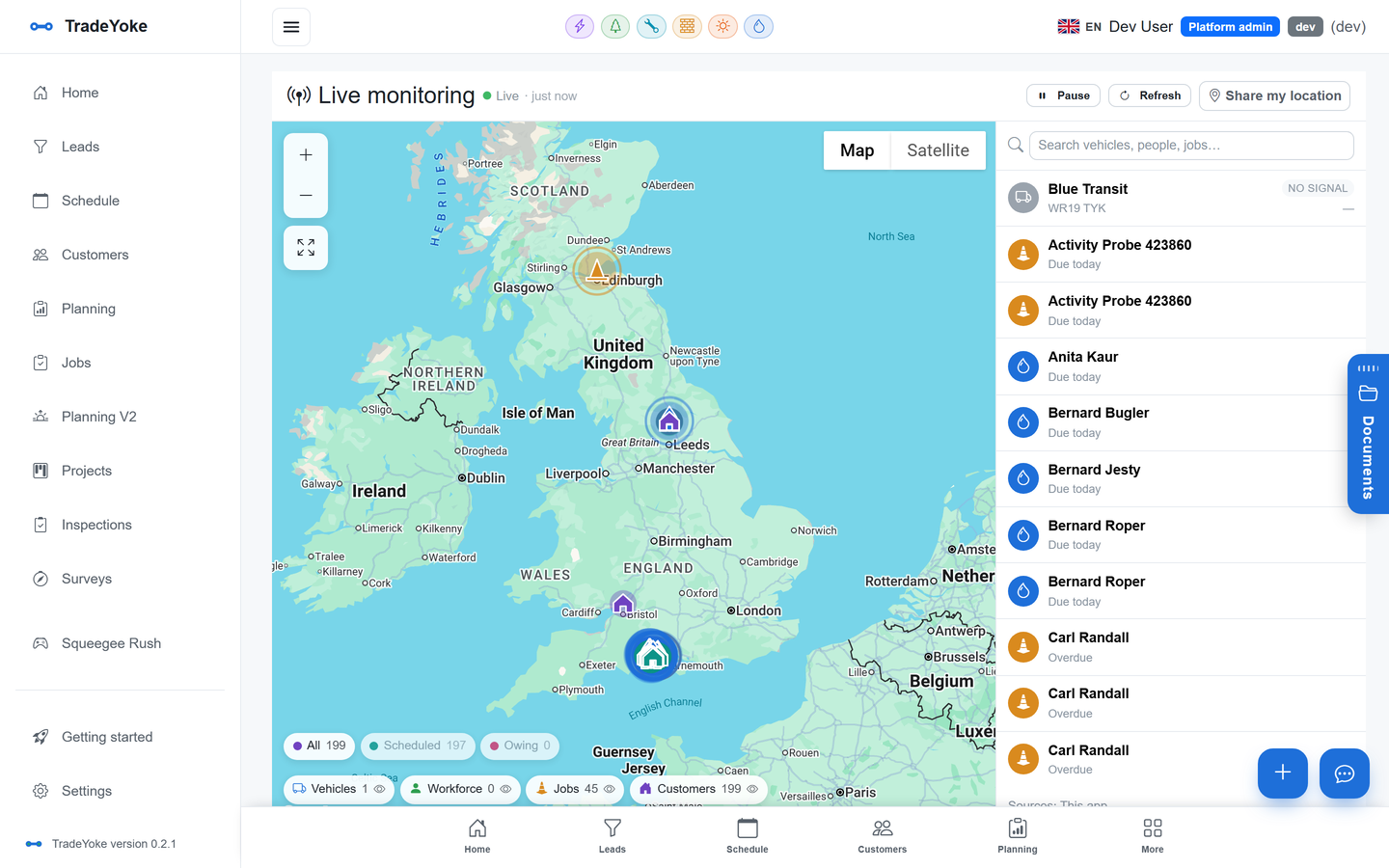
The quotes board in the platform keeps that chain visible: waiting on the customer, accepted, ready to book, booked. When the remedial invoice goes unpaid it turns up in the polite chasing sequence rather than in a spreadsheet you forgot to open.
An unsatisfactory EICR is the only certificate that arrives with its own quote attached.
TradeYoke
Running the five-year cycle in practice
The five-year EICR rhythm
- Issue the report with the next-inspection date on itFive years at most for a rental; shorter if the condition warrants.
- File it with an expiry against the property and the landlordWhere it will surface, not where it will be forgotten.
- Quote the C1 and C2 observations the same dayThe remedial clock is 28 days; the quote should not use ten of them.
- Remind the agent three months before expiryBy email or text, from the record so the send is on file.
- Book the next inspection inside the windowThen the cycle runs itself.
Landlords with gas appliances have a parallel duty every 12 months, covered in the landlord gas safety record post. Agents managing both like one supplier who reminds them about both, which is one reason compatible trades share an account on TradeYoke. The plans on the pricing page are per business, not per trade or per user.
Questions people ask
Is an EICR the same as an EIC?
No. An Electrical Installation Certificate (EIC) is issued for new work, a new installation or a major alteration, and confirms it was designed, built and tested to BS 7671. An EICR is a periodic condition report on an existing installation. A brand-new installation with an EIC still needs an EICR within five years of it if the property is let.
Do HMOs need an EICR more often?
Houses in multiple occupation fall under the same five-year maximum, and licensing conditions may add requirements. The licence is set by the local council, so check the conditions on it rather than assuming the standard cycle is enough.
Does a homeowner need an EICR every five years?
There is no legal requirement for an owner-occupier, though one is widely recommended every ten years, when buying a property, or before major work. The five-year rule is specifically for private rented homes.
Who counts as a qualified and competent person?
The regulations do not name a register. Government guidance points landlords to competent-person schemes and to electricians who can demonstrate qualification and experience for inspection and testing. Membership of a scheme such as NICEIC or NAPIT is the simplest way to show it.
Make the next EICR the easiest booking you win
TradeYoke's electrician pilot files every certificate with its expiry, quotes the remedials and reminds the agent before the five years is up. Start a 30-day trial of Essentials with no card.