Chasing late payments the polite way (and your rights when polite fails)
A reminder ladder that keeps customers, the automation that gets you paid weeks sooner, and exactly what the Late Payment Act lets you charge when a business ignores you.
Most late payments are not refusals. They are forgotten emails, a partner who handles the bills, or a bank transfer that never got made. Chasing politely, early and automatically collects almost all of them without a difficult conversation.
For the few that remain, UK law gives you real rights against business customers, and a clear process for domestic ones. This post lays out the polite ladder first, then what to do when polite fails.
Chasing late payments starts before the invoice is late
The easiest late payment to chase is the one that never happens. Send the invoice the day the work is done, not on Sunday evening. Put a pay link in it so the customer can settle from the sofa. State the due date in plain words rather than "net 14".
That alone removes the customers who simply needed it to be easy. How UK tradespeople get paid the same day covers the pay links, cards and Direct Debit that make paying the path of least resistance.
The polite ladder
A ladder is a fixed sequence of messages with a fixed tone, so you never have to decide how annoyed to be. Each step assumes the customer is honest and busy, right up until the last one.
- Day 0. The invoice, with the pay link and the due date.
- Due date. A friendly note: "Just a reminder that this is due today. The link is below if it's easier."
- Seven days late. A short, direct message: the invoice number, the amount, the link, and a line asking them to let you know if there is a problem with the work.
- Fourteen days late. A statement of everything outstanding and a date by which you will need it settled.
- Twenty-one days late. The final notice, which says what happens next.
Every message includes the link. Every message is polite. The tone never rises; only the clarity does.
Polite is not the same as soft. The ladder is polite every step and clear about the last one.
TradeYoke
Automate the ladder and get paid weeks sooner
The ladder only works if it actually runs, and on a busy week it will not run from memory. Automated reminders send each step on schedule, and Xero's research on UK late payments found that businesses using automated reminders get paid up to 54 days sooner than those chasing by hand.
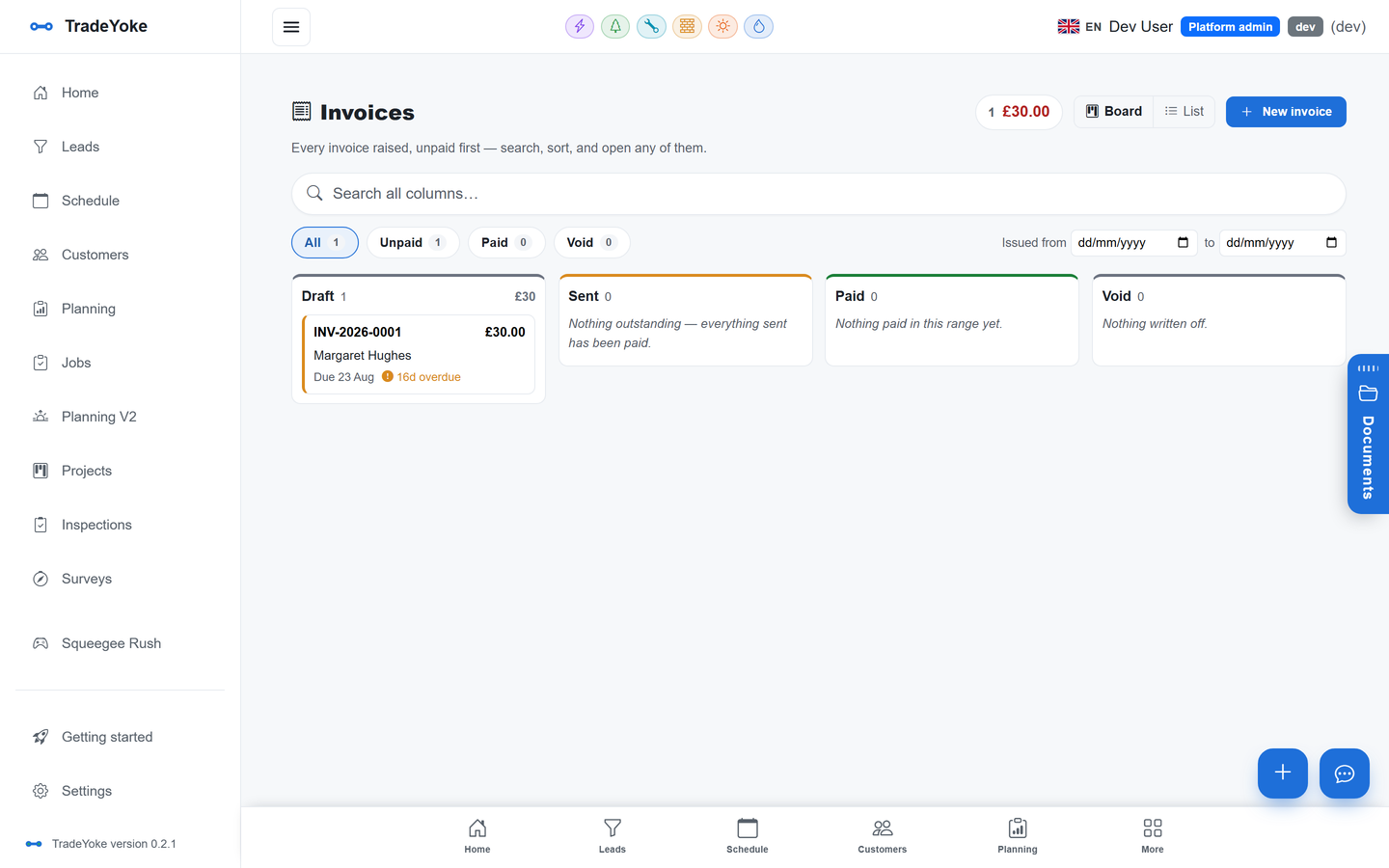
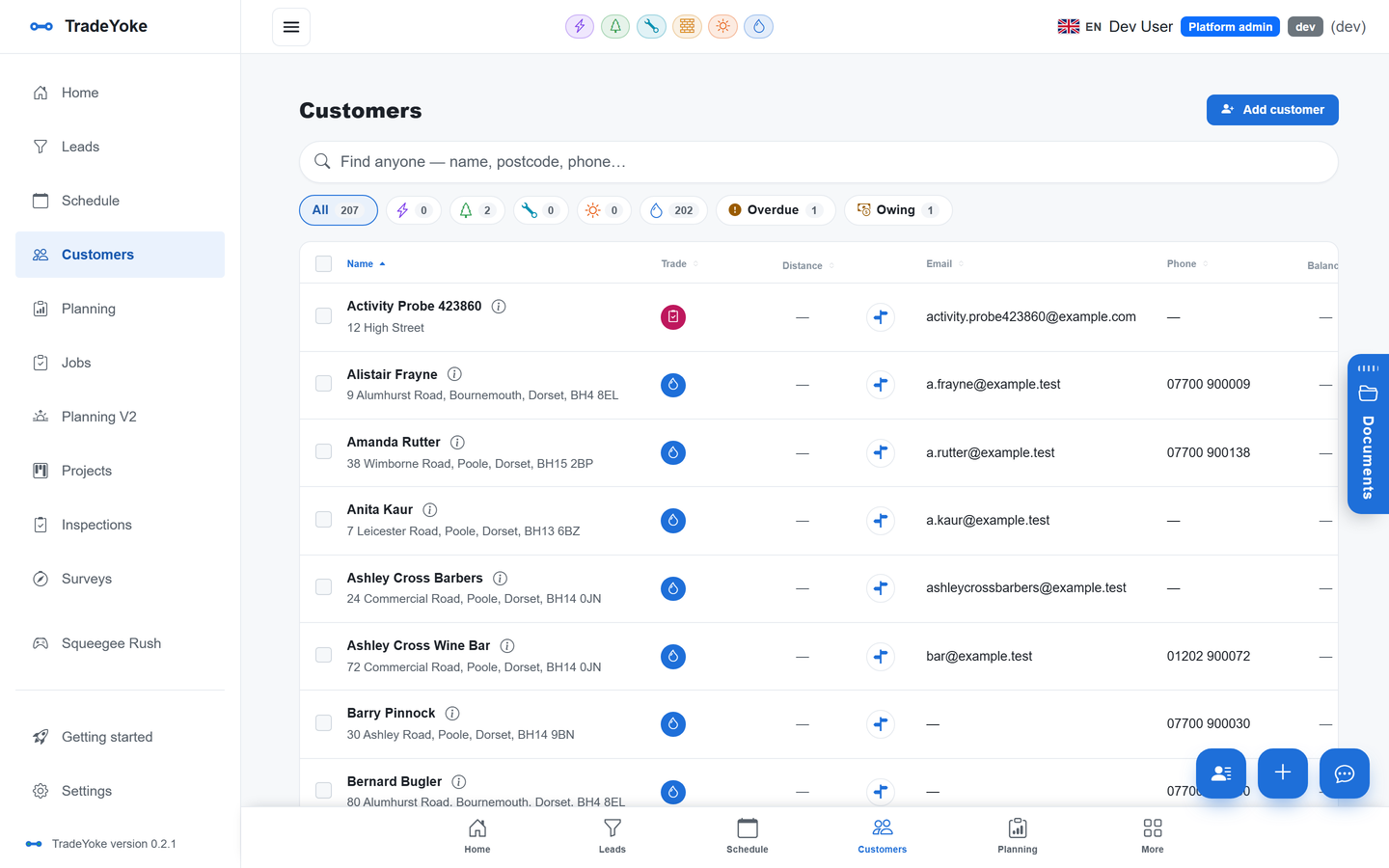
In TradeYoke the message wizard sends email or SMS now or at a scheduled time, and owing notices go to customers with an outstanding balance. Replies land in the customer's thread, so "I've paid this morning" and "the gate was locked so I disputed it" both arrive where you will see them. The morning who-owes-me email tells you each day which customers are on which rung.
When polite fails: your rights against a business customer
If the customer is a business, a letting agent, a landlord trading as a company, a main contractor, the Late Payment of Commercial Debts (Interest) Act 1998 applies whether or not your terms mention it. Once a debt is late you are entitled to:
- Statutory interest at 8% above the Bank of England base rate, calculated daily from the day after the due date.
- A fixed sum of £40, £70 or £100 per invoice as compensation for recovery costs, depending on the size of the debt.
- Reasonable recovery costs beyond the fixed sum, if you can show them.
If no payment date was agreed, the debt is late 30 days after the invoice or the delivery of the work, whichever is later. You do not have to charge interest, but knowing you can changes the final-notice conversation.
Fixed compensation under the Late Payment Act
| Size of the debt | Fixed sum you can claim |
|---|---|
| Up to £999.99 | £40 |
| £1,000 to £9,999.99 | £70 |
| £10,000 or more | £100 |
When polite fails: a domestic customer
For a householder the route is different. Send a letter before action: a plain letter stating the debt, the invoice, what you have already sent, and a date (usually 14 days) after which you will make a claim. Most domestic debts are paid at this point, because the letter makes it real.
After that, small claims through the courts service online handles debts up to £10,000. The fees are modest and you do not need a solicitor. Whether it is worth it for a £15 clean is your call; it usually is not, and the better answer for regulars is Direct Debit, which we cover in Direct Debit for window cleaners.
Keep the record, because the record wins
Every step of the ladder should be visible on the customer's record: the invoice, the date it was sent, each reminder, each reply. If a dispute ever reaches a letter before action, the record is your case. If it never does, the record is what tells you which customers to move to Direct Debit and which to let go.
TradeYoke keeps messages, invoices and payments on one customer record across every trade you run, and the ledger behind it cannot be edited after the fact. See the platform overview for how the pieces fit, and the pricing page for which plan includes owing notices and online payments. The same tools work for any of the trades TradeYoke supports.
Questions people ask
How soon should I send the first reminder?
On the due date. A friendly note with the pay link on the day it is due catches most forgotten invoices before they become awkward. The first firmer message comes a week later.
Can I charge interest on a late invoice?
Against a business customer, yes: the Late Payment of Commercial Debts (Interest) Act 1998 allows 8% over the Bank of England base rate plus a fixed sum of £40, £70 or £100 depending on the debt. It does not apply to domestic customers. Check gov.uk before you rely on it.
Do automated reminders annoy customers?
Not when they are polite, spaced out and carry the link. What annoys customers is a sudden angry message after weeks of silence. A steady, predictable ladder reads as professional.
What if the customer disputes the work?
Stop the ladder and talk. A dispute is a service question, not a payment question. Photos and notes on the job record usually settle it; once it is resolved, the reminders resume from where they stopped.
Let the ladder run itself
Owing notices, scheduled reminders and pay links are on from day one of the free trial.