Rain days: how a round survives a wet week
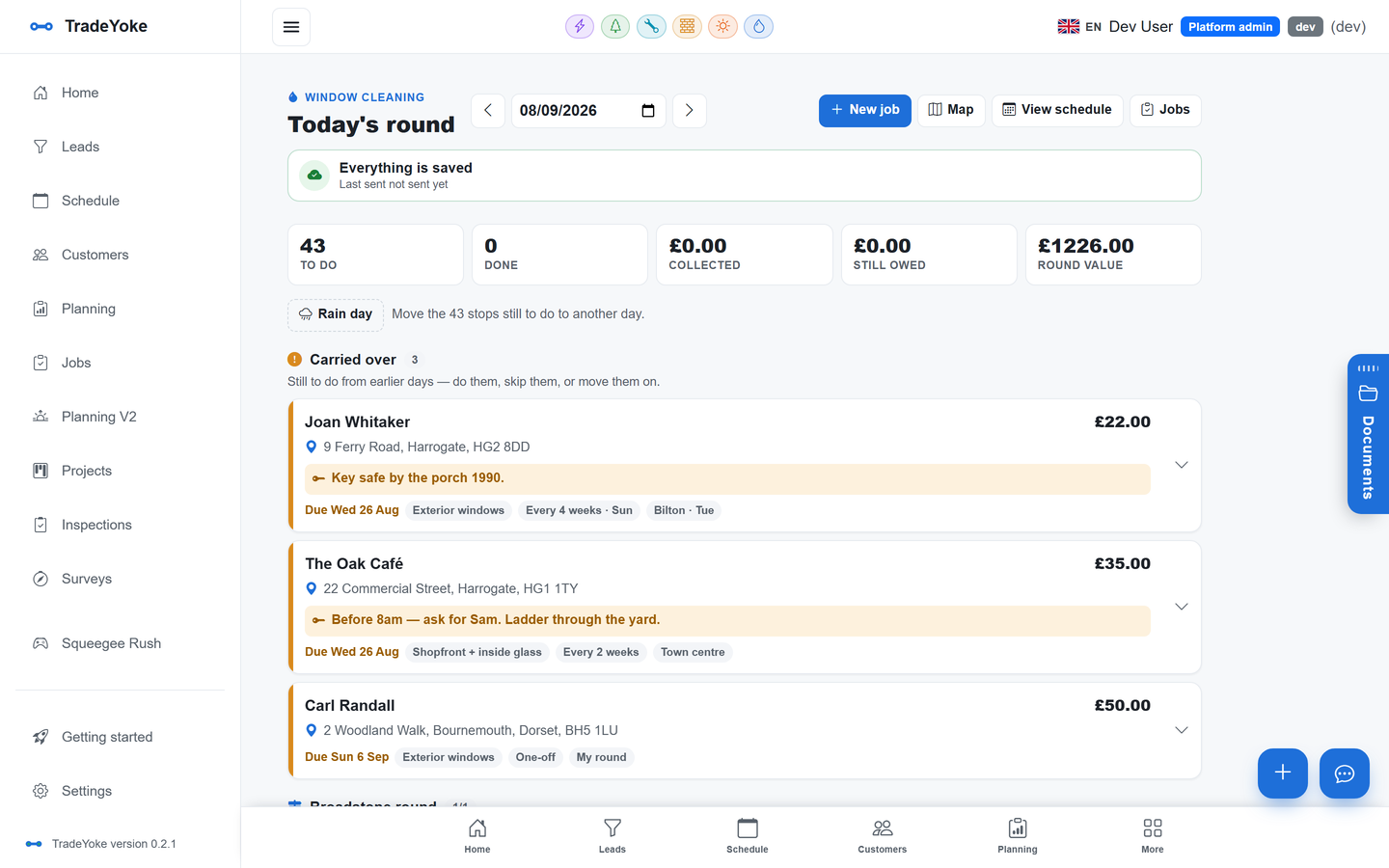
A wet Tuesday is not a lost day if every visit has its own record. Carry the undone stops forward in one go, replan Wednesday nearest-first, and the round is back on cycle by Friday.

A round survives a wet week when every visit has its own record and undone stops can be moved forward in one go. Then a rained-off Tuesday is not a lost day; it is twenty stops carried to Wednesday and Thursday, replanned nearest-first, with the customers told the night before.
Most rounds get this wrong because the diary only knows about the series, not the visit. This post explains the difference, how carry-over works, and how to get back on cycle by Friday without cleaning in the dark.
Window cleaning rain days: the problem is the diary, not the weather
Rain itself is manageable. Pure water and a pole work in drizzle, and most customers accept a wet clean as long as it is not pouring. The problem is what the diary does with the stops you could not reach. If your system only knows "Mrs Patel, every four weeks, Tuesday", then a missed Tuesday either vanishes or quietly becomes an eight-week gap, and neither is true.
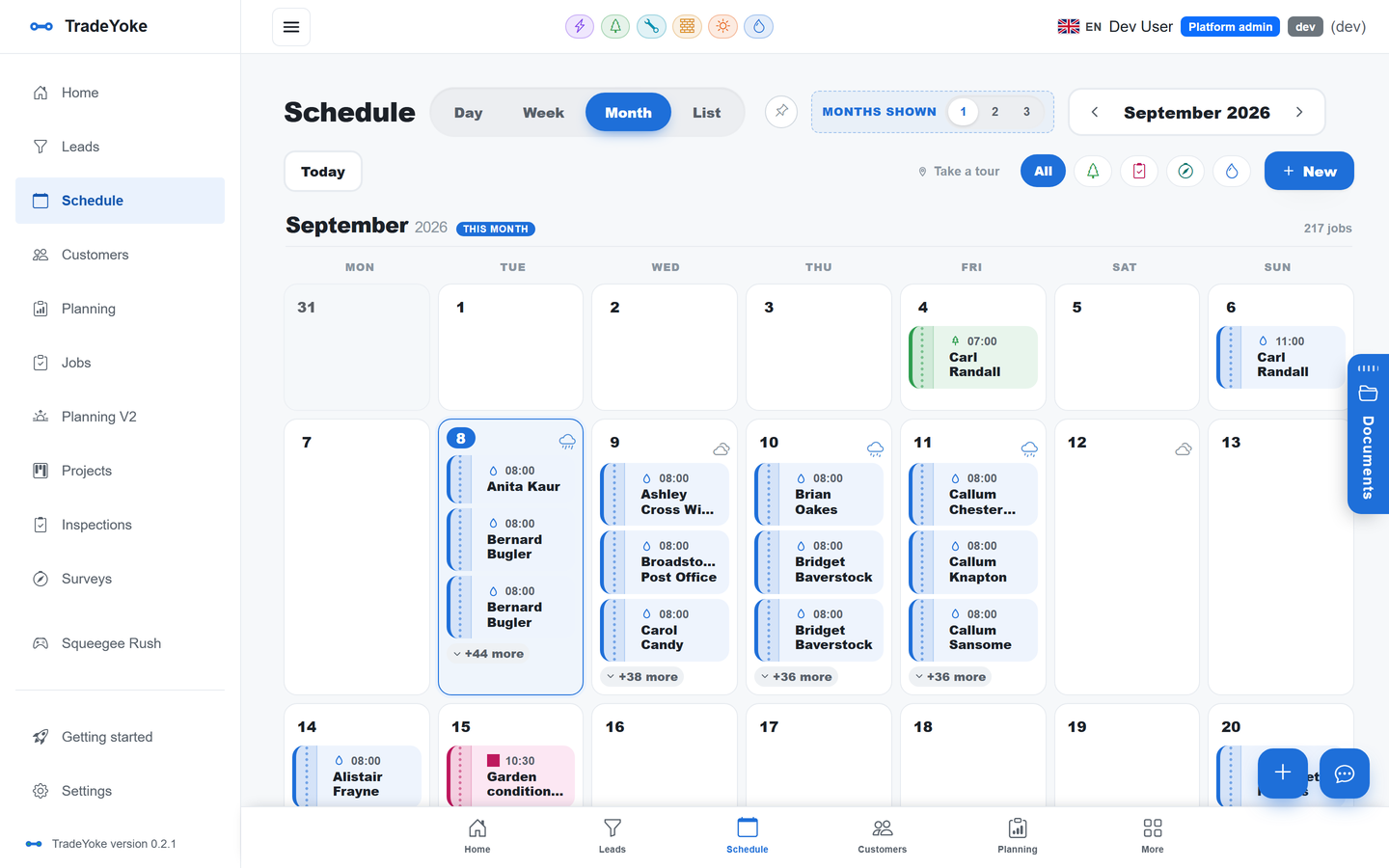
What you need is a record per visit: this Tuesday's clean at Mrs Patel's, separate from the one in four weeks' time, with its own status of done, skipped or carried over. That is the difference between a diary and a round, and it is how the window cleaning module is built.
Carry over, in one go
At the end of a rained-off day you have a list of undone stops. Moving them one at a time is the job you never finish. The rain-day action moves every undone stop on the day to another day in a single step, keeping each visit's record so the history reads "carried over from Tuesday" rather than "missed".
Where they go is the decision. Some rounds push everything to the next dry day and run long; some spread the stops across the rest of the week; some carry them into next week's round on the same street so the customer's gap is five weeks instead of four. There is no single right answer, but the app makes each one a single move rather than twenty.
Replan tomorrow nearest-first
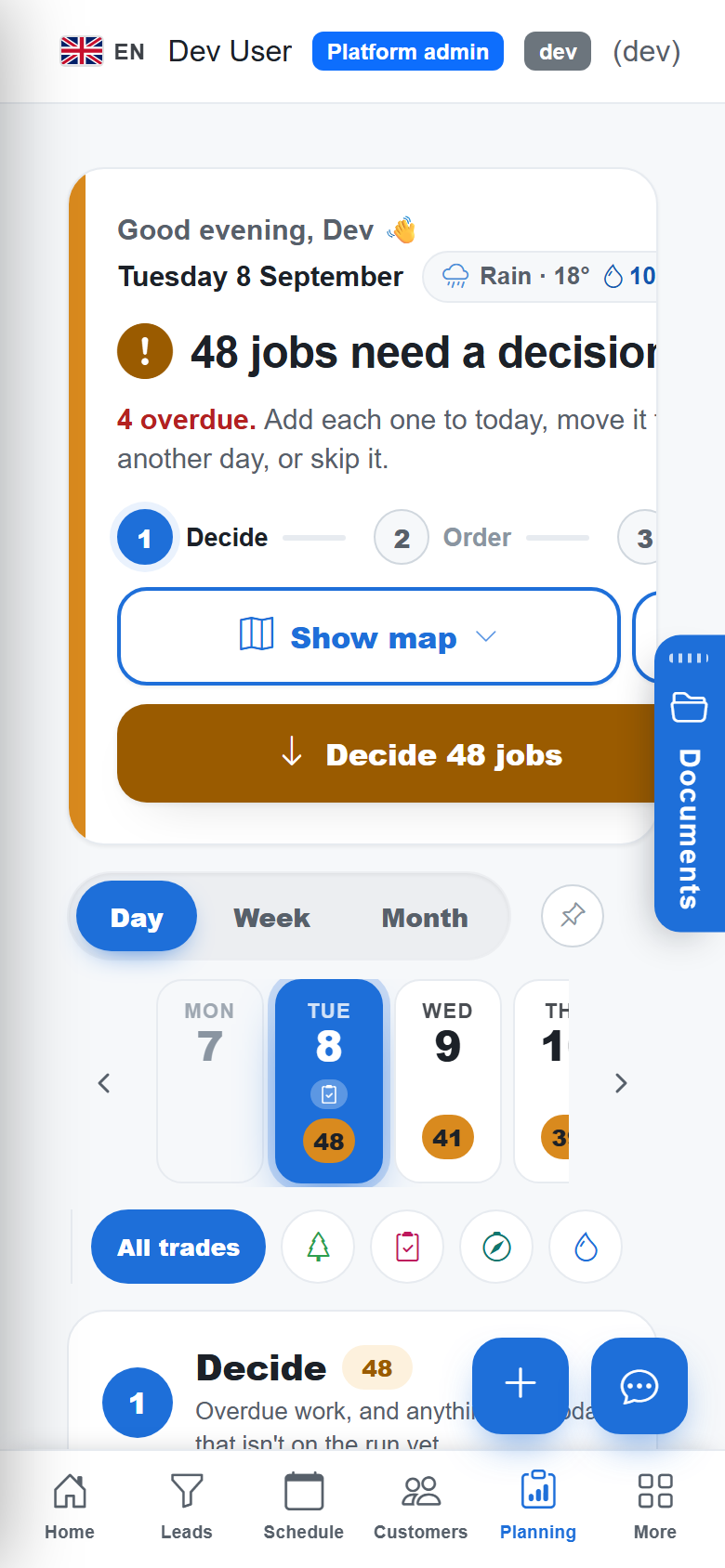
A day with Tuesday's leftovers dropped on top of Wednesday's round is a long day, and the way to make it a possible day is the order. Plan my day takes tomorrow's suggestions, the carried-over stops and anything overdue, lets you decide each one (today, another day, not now) and then orders the day nearest-first from the first stop, with the map alongside if you want it. Then it sends the plan to the phone.
That is also the moment to send the reminder texts, because they go to the customers on the plan rather than the round as it was meant to be. If you tell tomorrow's people tonight, the gates are open and the extra ten stops fit. The reasoning is in the text that stops locked gates.
Watch the weather before it watches you
The dashboard and the schedule show the forecast for the days ahead, so a wet Thursday shows up on Monday. Use it. Pull a couple of Thursday's outliers forward into Wednesday's route while the weather is dry, and Thursday becomes a short day that can absorb the rain. For the full forecast, the Met Office is the source most of us check anyway.
Telling customers, and telling the truth
When a clean is carried over, the customer needs one line. "Rained off today, we'll be round Thursday" is enough, and the app sends it to the carried-over stops as a group. When the clean is done, the record shows the date it actually happened, so the invoice, the receipt and the customer's history all agree. That matters if you collect by Direct Debit, because the collection is for the visit that happened, not the one that was planned.
Long term, per-visit records tell you how much weather actually costs you. The report shows what the round earned each week, so a wet fortnight is a number rather than a feeling, which helps when you price the round or decide whether a Saturday catch-up is worth it. Per-visit records and the weather view are on every plan, Free included, on the pricing page. There is more on the money side of the round in how to price a window cleaning round.
The wet-week routine
- Check the forecast on MondayPull outliers off the wet day while it is dry.
- Clean what you canDrizzle is fine with pure water. Only stop when it is genuinely pouring.
- Carry over in one goMove every undone stop on the day to its new day, keeping the visit records.
- Keep the cycleThe next visit stays four weeks from the original date.
- Replan nearest-firstPlan my day orders the long day so it is a possible day.
- Text tonightOne line to the carried-over stops and the reminder to tomorrow's plan.
A visit is a fact. A series is a wish. Keep a record of the facts and the weather cannot rewrite your round.
TradeYoke
Questions people ask
Should I clean in the rain?
Light rain with pure water is fine and most customers accept it. Heavy rain is a carry-over. The judgement is yours, but the record per visit means either choice is recorded honestly.
What happens to the invoice for a carried-over clean?
Nothing until the clean happens. The invoice is generated from the visit when it is marked done, on the date it was done, so nothing is billed for a clean that has not taken place.
Does this work without signal?
Yes on the installed app. Marking stops done or carried over in a dead spot queues the change and syncs when you are back in range. The reasons are in why "works offline" is the feature you'll use most.
Do gardeners have the same problem?
Worse, because a wet lawn cannot be cut at all. The same carry-over and seasonal cadence apply; see fortnightly in summer, monthly in winter.
Make the wet week a short one
Carry over in one go, replan nearest-first, text the plan. Thirty days of Essentials free, no card.