The MCS certificate, explained for installers and their customers
The MCS certificate is what proves a solar install was done to the scheme's standards, and it is what unlocks the Smart Export Guarantee for your customer. Here is what it is, what MCS needs from you, and what goes in the handover pack.

An MCS certificate is the document that says a solar PV, battery or heat pump installation was carried out by an MCS-certified installer, using MCS-certified products, to the scheme's standards. Customers need it because it is what a supplier asks for before paying the Smart Export Guarantee. Installers need to issue it promptly and file it where it can be found in ten years.
This post is written for both sides of the handover: the installer who has to produce it, and the customer who is going to ask what it is for.
What the MCS certificate actually is
MCS is the Microgeneration Certification Scheme, the UK quality mark for small-scale renewable installations. It certifies two things separately: products, which must meet the relevant MCS product standard, and installers, who are assessed against the installation standards and audited to stay on the register.
When a certified installer commissions a system using certified products, they register the installation on the MCS database and the customer receives an MCS certificate for it. The certificate identifies the installer, the products, the system size and the commissioning date. It is not a warranty and it is not an electrical certificate; it sits alongside both. The MCS website holds the current standards and the installer search customers use to check you.
Why customers care: the Smart Export Guarantee
The Smart Export Guarantee (SEG) has been in place since January 2020. Licensed electricity suppliers with 150,000 or more domestic customers must offer a tariff that pays for electricity exported to the grid, and the rate must be above zero. Beyond that the suppliers set their own rates, so they vary and change.
To get an SEG tariff the customer needs an MCS certificate or an equivalent recognised by the supplier, an export meter capable of half-hourly readings (a smart meter in practice), and a system no larger than 5 MW. The certificate is therefore the first thing the customer's supplier asks for, which makes it the first thing the customer asks you for. Ofgem's page on the scheme is the reference.
The data sheet: what MCS wants from you
Registering the installation means submitting a data sheet: installer and customer details, the site, the certified products by model, system capacity in kWp, orientation and tilt, the estimated annual generation worked out with the MCS method, the commissioning date and the DNO notification. Get any of it wrong and the certificate is wrong, and correcting it later is a chore.
MCS expects the installation to be registered promptly after commissioning, within days rather than months; the scheme rules set the exact window, so check the current version. The practical answer is to fill the data sheet in on site while the panel labels are in front of you. The Solar installer trade in TradeYoke is in pilot with real installers and does this: the MCS submission data sheet is a form on the job, the design and files can be imported from OpenSolar, and the sheet is filed with the certificate. The solar installer page lists what the pilot covers.
The handover pack
The handover pack is what the customer keeps, shows their supplier, and hands to the buyer when the house is sold. A thin pack costs you phone calls for years. A full one costs you twenty minutes.
What belongs in the handover pack
- MCS certificateThe scheme certificate for the installation.
- Commissioning certificateSystem tests and readings on the day it went live.
- DNO paperworkThe G98 notification or the G99 approval, whichever applied.
- Electrical certificateThe EIC or Minor Works certificate for the electrical work, to BS 7671.
- Performance estimateThe annual generation estimate from the MCS method, with the assumptions.
- Single-line diagram and layoutSo the next engineer can see what was installed and where.
- Warranties and manualsPanels, inverter, battery, mounting, and the workmanship warranty.
- Building control notificationWhere the work was notifiable under Part P.
The pilot produces the customer handover pack from the job, pulling in the certificate, the commissioning record, the single-line diagram and the DNO application, and emails it from the record so the send is on file. The DNO side, and the difference between notifying and applying, is covered in G98 vs G99: DNO applications without the wait. The electrical certificate follows the same rules as any other electrical work; the EICR post explains how certificates with an expiry become future work.
The handover pack is the last thing the customer sees from you and the first thing they show everyone else.
TradeYoke
Where the certificate lives afterwards
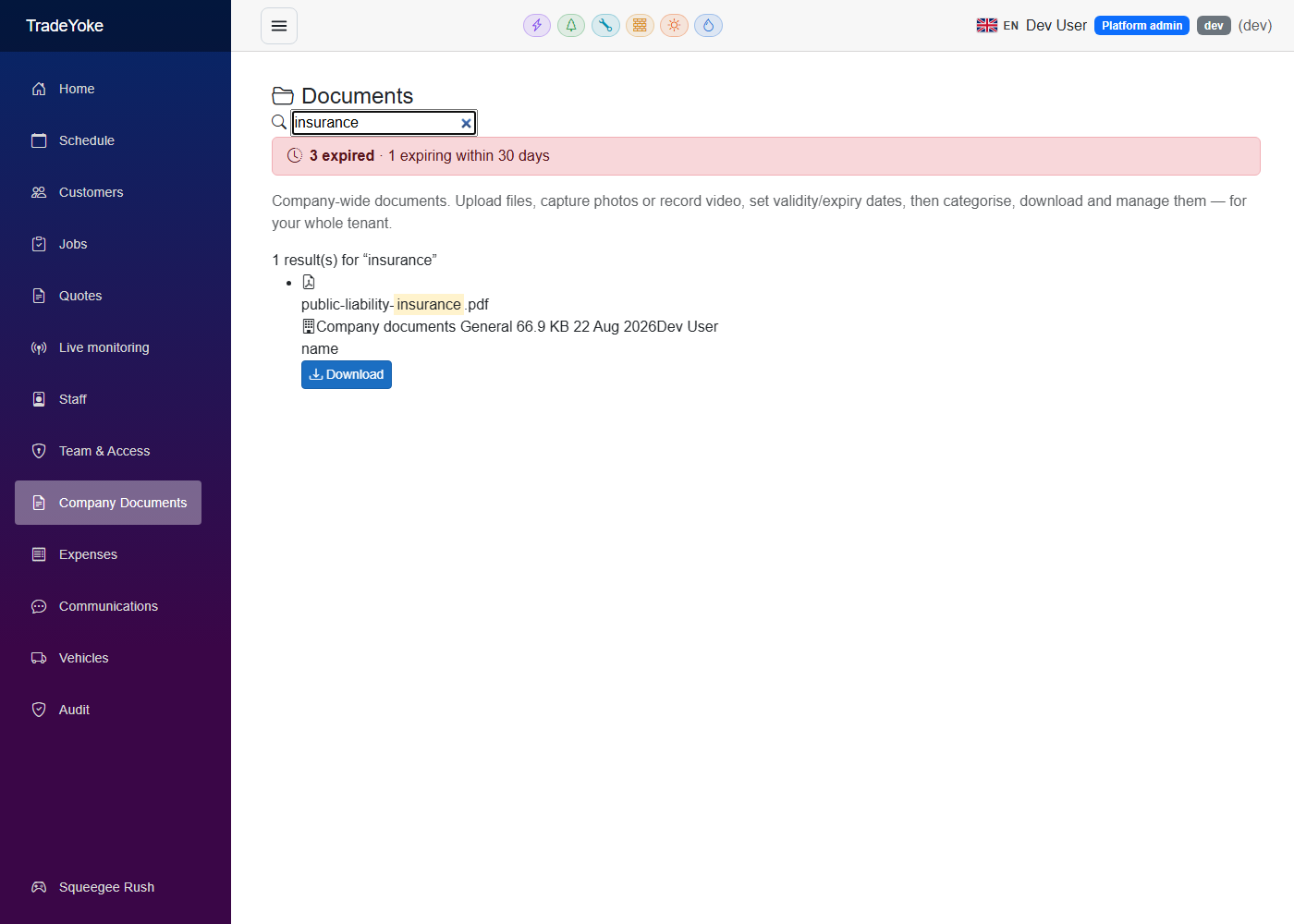
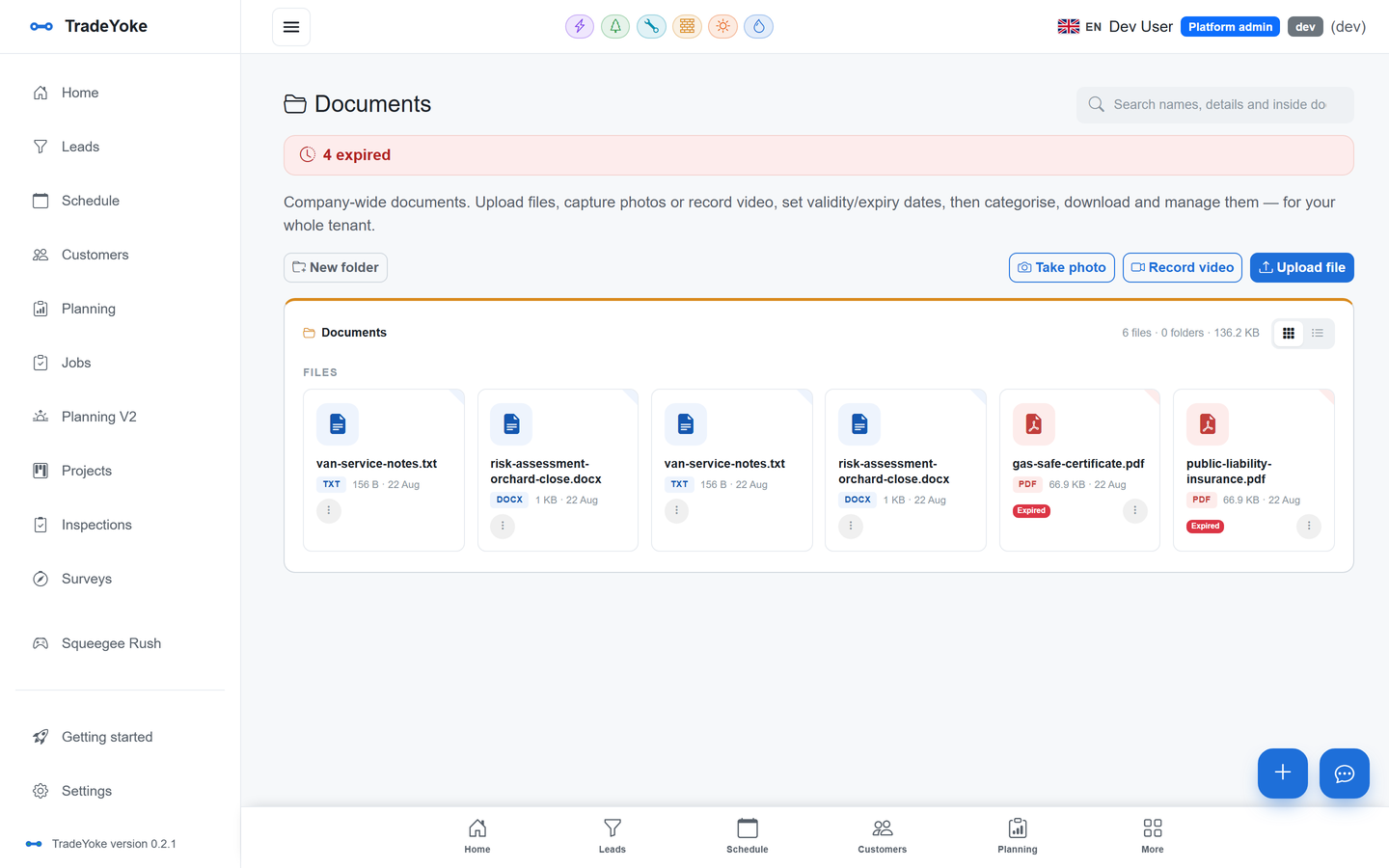
Filing matters more for solar than for most trades, because the documents outlive the phone they were made on. A certificate filed in the document library against the customer and the job is there when the customer moves house, when the inverter fails in year eight, and when the supplier changes its SEG rules. Search inside PDFs finds it by the inverter serial number, which is usually what the customer has to hand.
Plans on the pricing page are per business. Solar firms that also do the electrical work run both trades on one account, which is what the two-trades post is about.
See also: the full Paperwork & compliance guide
Questions people ask
Can a customer get the Smart Export Guarantee without an MCS certificate?
Suppliers must offer SEG to installations with an MCS certificate or an equivalent they recognise. In practice most suppliers ask for MCS, so an install by a non-certified installer usually cannot claim it. Check the individual supplier's terms.
Does MCS cover batteries as well as panels?
Yes. MCS publishes a standard for electrical energy storage, and battery installers can be certified against it. Note that SEG pays for electricity generated and exported; a battery on its own does not qualify, and export from a battery charged from the grid is treated differently by suppliers.
Is the 0% VAT rate on solar tied to MCS?
No. The VAT relief on energy-saving materials installed in residential property is a tax rule with its own conditions, not an MCS requirement. Confirm how it applies to a specific job with your accountant or HMRC's guidance.
How long should the customer keep the certificate?
For the life of the system. It is needed for SEG, for warranty claims, for some finance and insurance products, and for the buyer when the property is sold. That is why a filed copy on your side is worth keeping too.
Issue the certificate and the pack from the job
TradeYoke's solar installer pilot produces the MCS data sheet, commissioning certificate and handover pack from the job and files them with the customer. Start a 30-day trial of Essentials with no card.