Garden maintenance contracts that stick: task lists, extras and 30 days' notice
A fixed price against a written task list, month to month with 30 days' notice, and every extra quoted first. The contract structure that stops scope creep and keeps gardens on the books for years.

A garden maintenance contract that sticks has three parts: a fixed price per visit or per month, a written list of what that price covers, and a month-to-month term either side can end with 30 days' notice. Anything not on the list is an extra, quoted and agreed before it is done.
That is the whole structure. The rest of this post is about why each part matters, how to write the task list so it does not become an argument, and how to run the contract from the app so the invoice, the visit and the extras never disagree.
What a garden maintenance contract needs to say
Most disputes with a maintenance customer come from a gap between what they think they are paying for and what you think you are being paid for. A vague "general maintenance, £120 a month" fills that gap with assumptions on both sides. Within a season the customer expects the hedge cut and the shed cleared and you are doing four hours for two hours' money.
The contract's job is to close the gap in writing before the first visit. It does not need a solicitor; it needs one page a customer will actually read, with the price, the visit pattern, the task list, how extras work and how either of you can stop.
The one-page contract
- The price and what it is perPer visit or per month, stated plainly, with the VAT position.
- The visit patternFortnightly in the growing season, monthly in winter, or whatever the garden needs. See the seasonal schedule post below.
- The task listWhat every visit includes: mow, edge, weed beds, light pruning, blow and clear. Nothing else.
- ExtrasAnything not on the list is quoted separately and agreed before it is done.
- Green wasteWhether removal is included, and what it costs per bag or load if not.
- Access and weatherWhat happens if the gate is locked or the ground is waterlogged: the visit is carried over, not lost.
- Payment termsWhen the invoice is raised and how they pay: Direct Debit, card link or transfer.
- NoticeMonth to month, 30 days' notice in writing from either side.
Fixed price, not hourly
Charge a fixed price for the task list rather than an hourly rate. Hourly invites the customer to time you and rewards you for being slow. Fixed rewards you for being efficient and gives the customer a number they can budget for. Work out the fixed price from your hourly target and the honest time for the list, then add a margin for the wet visit that takes longer.
Per visit or per month is a choice about cash flow. Per visit is easy to understand and matches the invoice to the work. Per month evens out the seasons: the customer pays the same in February as in June and you are not scrabbling for income over winter. If you go monthly, the seasonal visit pattern must be in the contract, or the customer feels short-changed in January. Direct Debit suits monthly billing well; the mechanics are the same as in Direct Debit for window cleaners.
The task list is the contract
Write the list as verbs the customer can see the result of. "Mow and edge the lawn, weed the borders, deadhead, light pruning of shrubs under head height, blow and clear paths, remove green waste." Then write what is not included, because that is the list that stops scope creep: hedge cutting, tree work, turfing, planting, pressure washing, clearing beds of established weeds on the first visit.
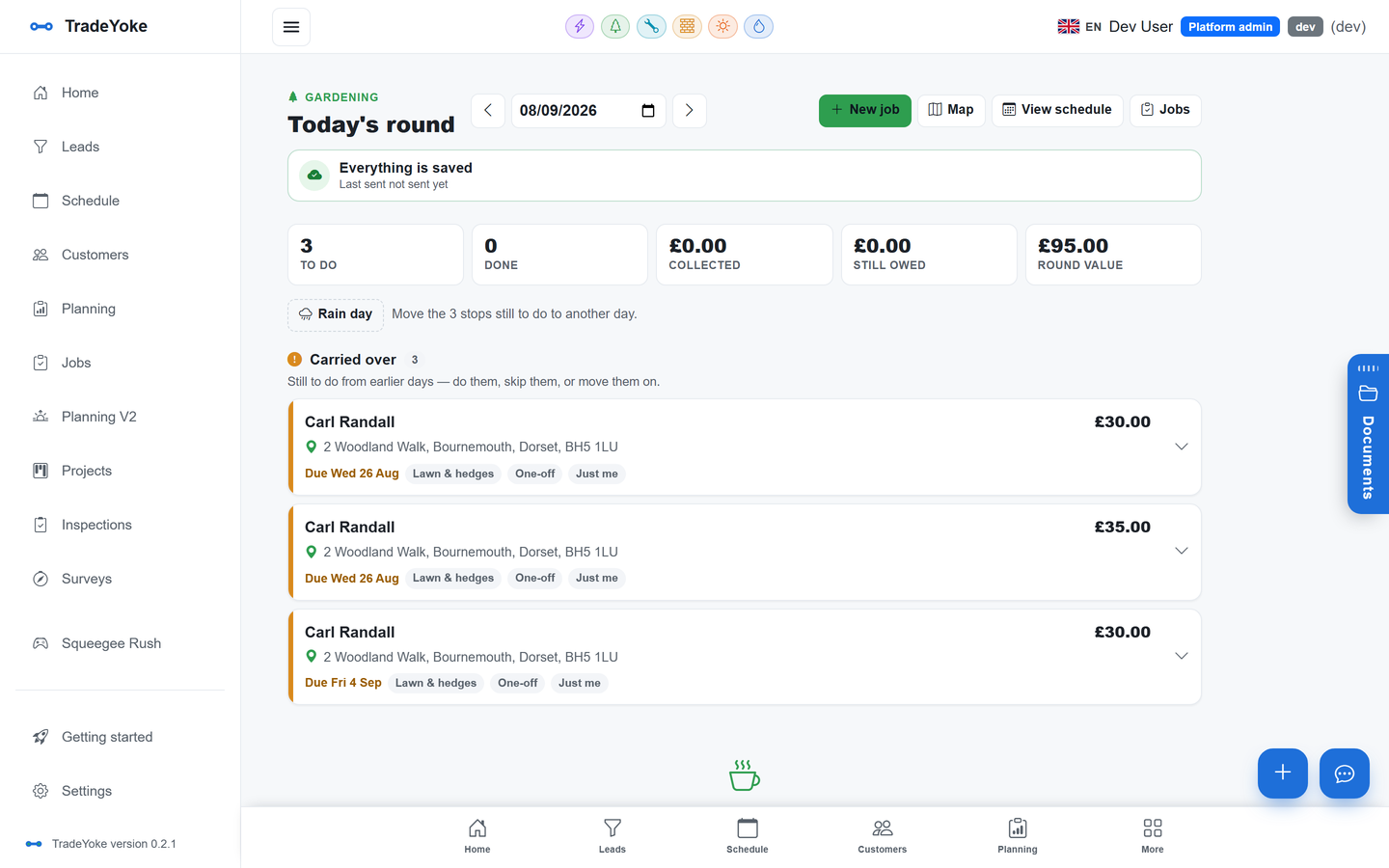
In the app the task list lives on the customer's gardening settings, so every visit shows the same list on the phone and the invoice describes what was done. When the customer asks for the hedge, the extra is quoted from the same record and the invoice shows both lines. Nobody has to remember what was agreed.
Extras: quote first, always
Extras are where a maintenance round makes or loses its margin. The rule is simple and it is the one that takes discipline: nothing outside the list is done until it is quoted and agreed. A quote can be a line on the phone in the app, sent by text, accepted with a tap. That takes a minute and turns "can you just" into paid work.
It also makes the customer feel in control, which keeps them on the books. People do not resent paying for a hedge they asked for and agreed a price on. They resent a surprise on the invoice. The quotes board on the gardening trade page shows the extras waiting on a decision alongside the regular round, and an accepted extra becomes a job on the diary.
30 days' notice, and why it protects you
Month to month with 30 days' notice either way sounds like it favours the customer, and it does, a little. But it also protects you. It means you can drop the garden that has become a problem, or raise the price with a month's warning, without breaking a fixed term. Long fixed terms sound secure and in practice lock you into under-priced work.
Contracts agreed at the customer's home can carry cancellation rights under consumer law, so put the notice terms in writing and keep a copy on the customer record. The gov.uk guidance covers the basics; ask an adviser if your terms are unusual.
Running it from the app
Once the contract exists, the app runs it. The visit pattern becomes a recurring round with a record per visit. The task list is on the job. Extras are quoted, accepted and booked. The invoice is generated from the visit, emailed with the photos, and paid by link or Direct Debit. If a customer pays late, the reminders and the morning owed report deal with it; the tone is covered in chasing late payments the polite way. All of that is on the Essentials plan on the pricing page, with online payments on Premium.
The task list is the contract. Everything else is an extra, and every extra is quoted first.
TradeYoke
Questions people ask
Should I charge per visit or per month?
Per visit if your customers like to see the work on the invoice; per month if you want even cash flow through winter. If monthly, put the seasonal visit pattern in the contract so January is not a surprise.
What if the customer keeps asking for extras on the day?
Quote them on the spot from the phone and do them once accepted, or book them for the next visit. Never do them free. The habit is the whole margin.
Is a one-page contract legally enough?
For most domestic maintenance work a clear written agreement covering price, scope, extras and notice is what matters, and it is what stops disputes. If you take on commercial sites or unusual terms, get advice.
How do I handle winter when there is less to do?
Change the visit pattern with the season and say so in the contract. The detail is in fortnightly in summer, monthly in winter, and photos that prove the visit are in before-and-after photos that sell the next visit.
Put the task list on every visit
Fixed price, written list, extras quoted first, invoice from the visit. Thirty days of Essentials free, no card.